
When Russia launched its full-scale invasion of Ukraine in February 2022, few could have predicted just how deeply Japan—half a world away—would respond. Unlike the measured, cautious stance it often takes toward distant conflicts, Japan’s reaction this time was striking.
Suddenly, Ukrainian blue and yellow were everywhere—lighting up the Tokyo Metropolitan Government Office, flooding social media, and even flying alongside Japanese flags at public rallies.
But this wasn’t just symbolic support.
Ordinary citizens donated millions, opened their homes to refugees, and pushed businesses to cut ties with Russia.
What makes this outpouring particularly remarkable is its seeming disconnect from prior knowledge or connection.
Many of these passionate supporters had, just weeks before, been hard-pressed to locate Ukraine on a map. Yet almost overnight, they transformed into ardent advocates for the Ukrainian cause, their previous unfamiliarity with the country forgotten in a surge of solidarity.
The Japanese government, typically known for its careful diplomacy, took an unyielding stance, aligning swiftly with Western sanctions.
Now, with reports of potential U.S.-Russia talks excluding Ukraine in early 2025, many in Japan are voicing unease.
Why did this war, thousands of miles away, strike such a chord with the Japanese public? What turned Ukraine’s struggle into a cause that united people across political and social divides?
As someone living in Japan and witnessing this transformation firsthand, I’ll share what I’ve observed about this unprecedented wave of support—and how Japan became “Pro-Ukraine”!
- Japan’s Pro-Ukraine Rally
- The “Uncomfortable” Reality
- Is Japan Really “the Next Ukraine”?
- Conclusion: Realism Over Idealism
Japan’s Pro-Ukraine Rally
In Japan, strong support for Ukraine has emerged from several distinct perspectives.
First, there is a group deeply interested in international affairs, actively sharing information through Western media and social networks. They see the war in Ukraine as a struggle between democracy and authoritarianism, believing that Japan, as a member of the liberal democratic camp, should take a clear stance.
As of 22 February 2025, a survey on Yahoo! Japan’s “Everyone’s Opinion(みんなの意見)” asked, “Do you think a ceasefire between Russia and Ukraine will happen?” 74 percent of respondents answered no.
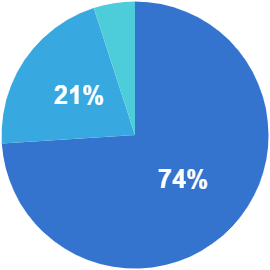
As of 22 Feb 2025, 74.3% (10,483 votes) said a ceasefire won’t happen, 21.2% (2,988 votes) said it will, and 4.6% (643 votes) were unsure or neutral.
* This vote is provisional, not final.
Many comments expressed strong concern, with some stating,
“It could destroy the democratic world order and allow the unilateral change of the status quo by force.”
Others emphasized, “We absolutely cannot tolerate any remarks that denigrate Ukraine regarding this war.”
Many also insisted, “No matter the background, it was clearly Russia that started the war, and it is undoubtedly a criminal state that should face sanctions for many years, even after the war ends.”
The comments concluded with a warning: “If Russia isn’t punished now, we may risk falling into another world war in the not-too-distant future.”
The overwhelming sentiment was a passionate defense of Ukraine and sharp criticism of both Trump and Putin.
Another significant group supports Ukraine primarily from a humanitarian perspective. These individuals participate in fundraising efforts and provide direct assistance to Ukrainian refugees.
Their motivation is simple: a desire to help those in need. As Japan has begun accepting more displaced Ukrainians, many have stepped forward to offer language assistance and daily life support.

Copyright ©2025 Impress Corporation. cited from an article from Impress Watch, 14 June 2022
Some view the war through the lens of Japan’s national security.
Concerned about Russia’s historical actions—such as its unilateral violation of the Soviet-Japanese Neutrality Pact in WWII and its continued occupation of the Northern Territories—this group perceives Ukraine’s plight as a warning for Japan’s future.
Many draw parallels between Russia’s aggression and China’s stance on Taiwan, with conservatives advocating for stronger defense measures under slogans like “Today’s Ukraine could be tomorrow’s East Asia.“
Many Japanese people feel a growing sense of urgency, fearing that military conflict in Ukraine could potentially spread to Japan shortly.
Moreover, anti-Russian sentiment itself plays a significant role.
A 2024 Cabinet Office survey found that 95.3% of Japanese respondents felt no affinity toward Russia—an exceptionally high figure shaped by historical grievances and ongoing territorial disputes.
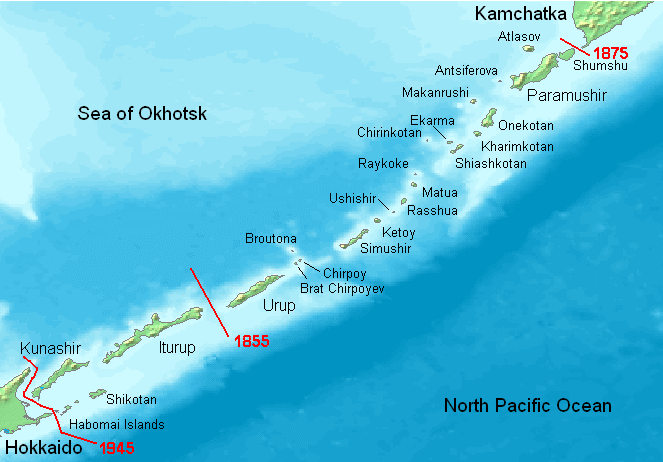
Then there’s the longstanding tension with Russia. The two countries have never fully resolved their dispute over the Northern Territories(北方領土), and Japan has always been wary of Russian military power. So when Russia flexes its muscles, Japan naturally sees it as a threat.
This deep-rooted distrust has naturally led many to sympathize with Ukraine, a nation now facing military aggression from Russia.
For this reason, Japan’s pro-Ukraine stance is not monolithic. It encompasses political, humanitarian, and security-driven motivations. Yet, despite these differences, what unites these perspectives is a shared recognition that this war is not just a distant conflict—it is a matter with direct implications for Japan’s future and its role on the global stage.
The fear that what’s happening in Ukraine today could happen in East Asia tomorrow. Many Japanese look at Ukraine and see a warning: a powerful neighbor invading a smaller one. The parallels feel unsettlingly close with China’s increasing assertiveness over Taiwan and the Senkaku Islands.
The “Uncomfortable” Reality
But here’s where things get awkward. Ukraine isn’t exactly the “innocent victim” some Japanese media portray.
When Russia invaded Ukraine, Japan’s reaction was swift and clear—strong condemnation, economic sanctions, and humanitarian aid. Public sentiment aligned with the government, and there was a rare sense of national unity in supporting Ukraine.
But beneath this surface of solidarity lies a tangled web of contradictions and hard truths.
For decades, Ukraine played a crucial role in China’s military modernization, supplying key technologies that helped bolster Beijing’s defense capabilities.
Remember the Soviet aircraft carrier Varyag? Ukraine sold it to China, which transformed it into the Liaoning—now a cornerstone of Chinese naval power. Beyond that, Ukraine transferred a range of military technologies.
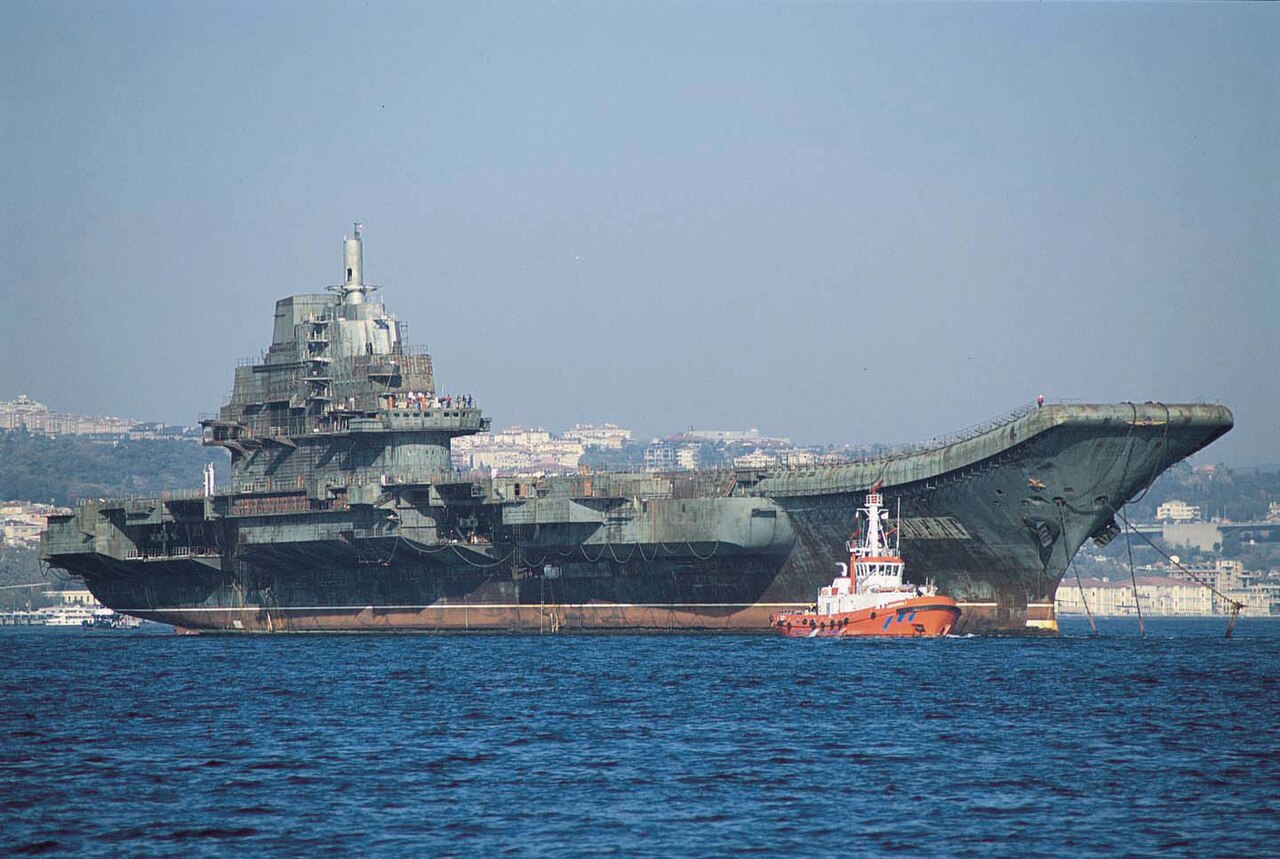
Estimates suggest that China spent at least $70-80 million annually on Ukrainian military technology before 2022. Notably, Ukraine sometimes provided China with technologies that even Russia was reluctant to share. However, as China developed its domestic capabilities, reliance on Ukraine decreased.
This relationship didn’t go unnoticed. The U.S. actively pressured Ukraine to block China’s acquisition of Motor Sich, a key engine manufacturer. And after Russia’s 2022 invasion, Ukraine’s frustration over China’s diplomatic stance further strained ties.
But here’s where things get even more awkward. Ukraine has also been accused of leaking missile technology to North Korea.
While Kyiv has strongly denied these claims, reports in 2017 suggested that North Korea’s missile advancements bore striking similarities to designs from Ukraine’s Yuzhmash facility. No definitive proof has emerged, but the allegations remain a point of concern.
For Japan, this isn’t just an abstract issue. China’s growing military power, fueled in part by Ukrainian technology, poses a direct security threat to the region. It’s a bit like discovering that your new best friend used to sell weapons to your neighborhood bully.

Is Japan Really “the Next Ukraine”?
At first glance, the idea that Today’s Ukraine is Tomorrow’s East Asia makes sense. But dig deeper, and the comparison starts to fall apart.
First, geography. Ukraine shares a land border with Russia. Japan, an island nation, faces a completely different strategic reality. A Chinese invasion wouldn’t look anything like Russia’s land assault on Ukraine.
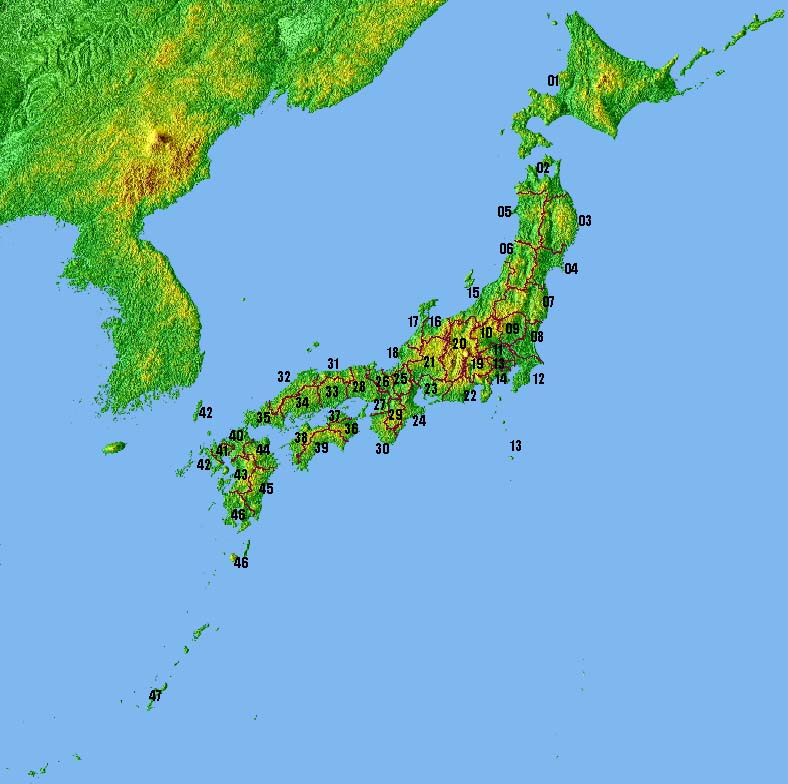
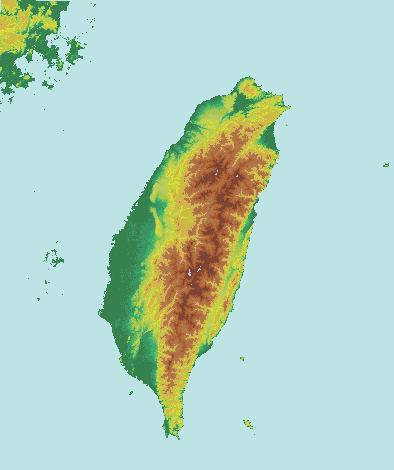
Japan and Taiwan are both island nations, with roughly 75% of their land covered by mountains. In stark contrast, only about 5% of Ukraine’s land is mountainous. A staggering 70% of Ukraine’s land is flat, which, while advantageous for offensive operations, makes defense and guerilla warfare particularly challenging.
Then, there’s the difference in military support. Ukraine fought largely on its own, while Japan benefits from the U.S. military—a massive deterrent that fundamentally changes the equation.
Whether or not Japan is a true ally of the United States, and regardless of whether it’s fully aligned with U.S. interests, Japan maintains a nominal alliance with the U.S.
The conflicts themselves are fundamentally different. Ukraine’s war stems from NATO expansion and Russia’s obsession with its sphere of influence.
China’s ambitions in East Asia? That’s a whole different ballgame, mixing military threats with economic pressure and diplomatic mind games.
Many Japanese believe that if Russia wins the war, China will be emboldened to invade Taiwan. While that possibility isn’t zero, the reality is far more complex.
This isn’t Hearts of Iron IV or Europa Universalis IV—in games, you can keep invading without worrying about the countless real-world consequences. But war isn’t just about strategy and troop movements. In reality, nations can’t ignore economic collapse, internal unrest, and the risk of prolonged conflict.
Russia’s war in Ukraine has come at a massive cost. Crushing sanctions and a drawn-out fight have likely fueled growing war fatigue. China has been watching closely, learning hard lessons from Russia’s struggles.
Just like Russia, China is a vast and deeply fractured nation as well. Its history is filled with dynasties rising and collapsing—often due to internal turmoil rather than external threats.
And China’s Communist Party’s biggest fear isn’t war—it’s losing control from within. If an invasion of Taiwan turns into a prolonged conflict, discontent could spread, shaking the very foundation of the regime.
For Beijing, maintaining Communist Party rule is the ultimate priority. A full-scale war, with its inevitable economic and political fallout, could destabilize China itself. That’s why, despite growing tensions, an invasion of Taiwan isn’t as simple—or as likely—as some fear.
Another crucial difference is economic significance.
While Ukraine contributes to the global economy through key commodities like wheat and rare metals, these are largely replaceable—China and India far exceed Ukraine in wheat production, and China and Vietnam dominate rare metal output.
In contrast, Japan and Taiwan are economic powerhouses—Japan in manufacturing and Taiwan in semiconductors. If either were drawn into war, the global economic consequences would be far more severe.
Reducing Japan’s security concerns to “Ukraine’s fate will be ours” oversimplifies complex geopolitical realities.
Conclusion: Realism Over Idealism
Supporting Ukraine isn’t the issue—what’s crucial is maintaining a rational, strategic approach rather than being driven by emotions.
Japan also needs to accept that international politics isn’t a simple hero-versus-villain story. Ukraine has made choices that potentially threaten Japanese security. In my opinion, ignoring this reality doesn’t help anyone.
Most importantly, Japan needs to stop seeing itself as “the next Ukraine.” The challenges Japan faces in East Asia are unique and require their own solutions. It’s time to move past simplistic comparisons and develop strategies that reflect the real complexities of East Asian security.
In the end, what Japan needs isn’t emotional reactions or oversimplified parallels. It needs clear-eyed realism and strategic thinking. The stakes are too high for anything less.



「この記事は興味深いです、ありがとうございます。」
(Kono kiji wa kyoumibukai desu, arigatou gozaimasu.)
いいねいいね: 1人