If you’ve tried to travel recently, you may have noticed something unusual.
Flights have been reduced, and fuel surcharges have risen sharply.
Traveling especially internationally has suddenly become more expensive and less convenient than before!
At first glance, this might seem like a temporary disruption.
But what if it’s a sign of something deeper?
…Living in Japan, you quickly notice how often the topic of a potential Taiwan conflict appears in the news.
It’s discussed on television, in newspapers, and across social media, usually in terms of semiconductors, supply chains, and regional security.
As I wrote in a previous article, when we weigh the potential costs and benefits for China, a Taiwan conflict is not impossible, but it is still unlikely to happen in the near term.
And yet, there is another risk.
One that is far less visible, but potentially more immediate… something that rarely enters everyday conversation.
A risk that may already be affecting our daily lives in subtle ways.
That risk lies thousands of kilometers away, in a certain region.
Recently, however, even here in Japan, this issue has started to attract more attention.
That’s…
The Middle Eastern crisis.
- What Is the Hormuz Strait and Why Does It Matter?
- Japan’s Energy Dependency: A Structural Weakness
- How a Hormuz Crisis Would Affect Daily Life in Japan??
- What Does “Existential Risk” Really Mean for Japan??
- Conclusion
What Is the Hormuz Strait and Why Does It Matter?
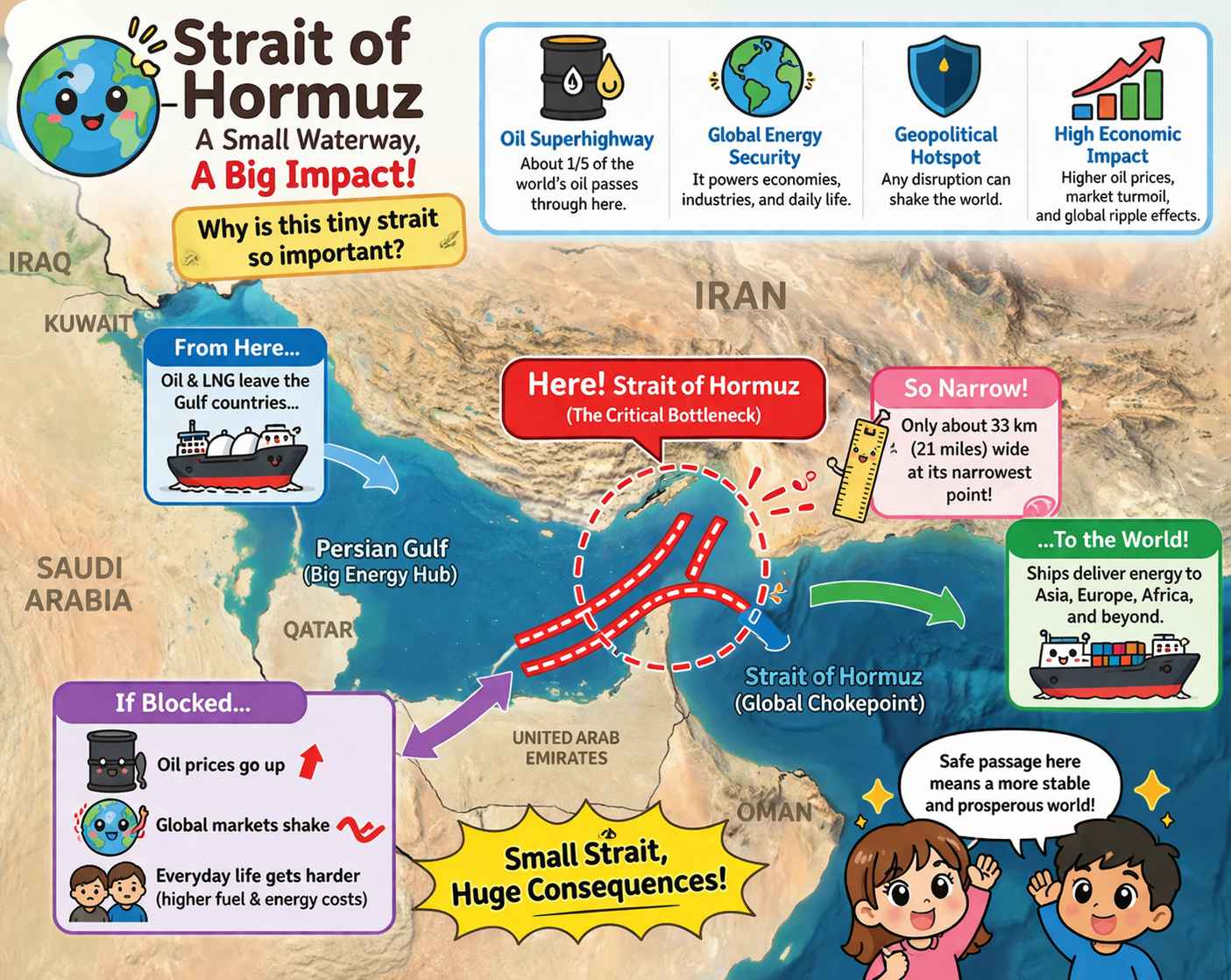
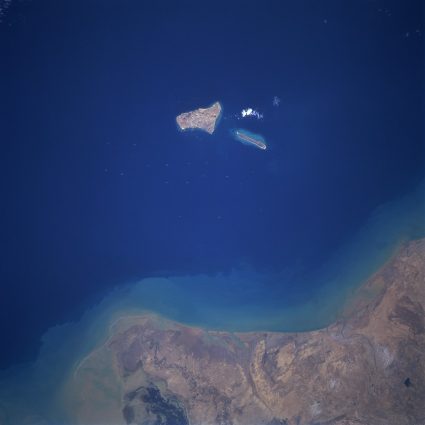
The Strait of Hormuz is one of the most critical maritime chokepoints in the world.
Roughly 20% of globally traded oil passes through this narrow corridor, making it a vital artery of the global energy system.
Tankers carrying crude oil and liquefied natural gas must pass through this strait to reach major economies in Asia, including Japan, South Korea, and China.
Geographically, the strait is narrow, only about 30 to 40 kilometers wide at its tightest point.
Politically, it is even narrower.
Iran, which borders the northern side of the strait, has repeatedly signaled its ability to disrupt or block traffic in times of conflict. Even minor tensions in the region can send shockwaves through global oil markets.
For most countries, this creates volatility.
Japan’s Energy Dependency: A Structural Weakness
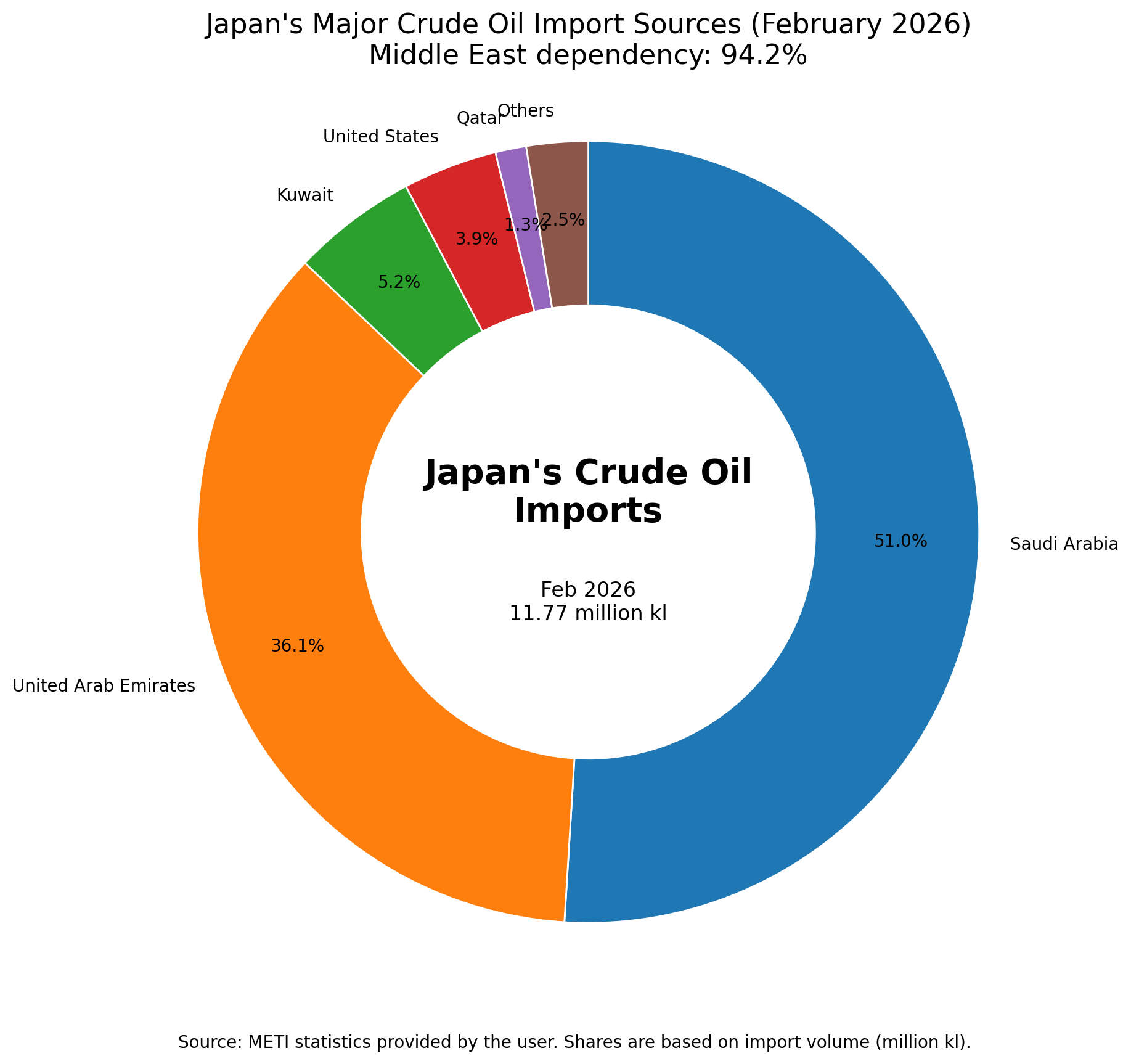
Source: METI (Ministry of Economy, Trade and Industry), Japan
Japan is one of the most energy-dependent developed economies in the world.
Unlike countries with domestic fossil fuel resources, Japan imports the vast majority of its energy. Approximately 90% of its crude oil comes from the Middle East.
And crucially, most of that oil passes through the Hormuz Strait.
This is not just a geopolitical statistic—it is a structural reality embedded in everyday life.
From transportation to electricity generation, from manufacturing to food logistics, Japan’s economy relies on a stable and uninterrupted flow of energy imports.
If the Hormuz Strait were to be disrupted—even temporarily—the consequences would not remain abstract.
They would be felt immediately.
How a Hormuz Crisis Would Affect Daily Life in Japan??
From the outside, geopolitical risks can seem distant and theoretical.
But living in Japan, you begin to understand how tightly everyday life is connected to global systems.
2026 Iran war would quickly translate into tangible changes.
Rising Gasoline Prices
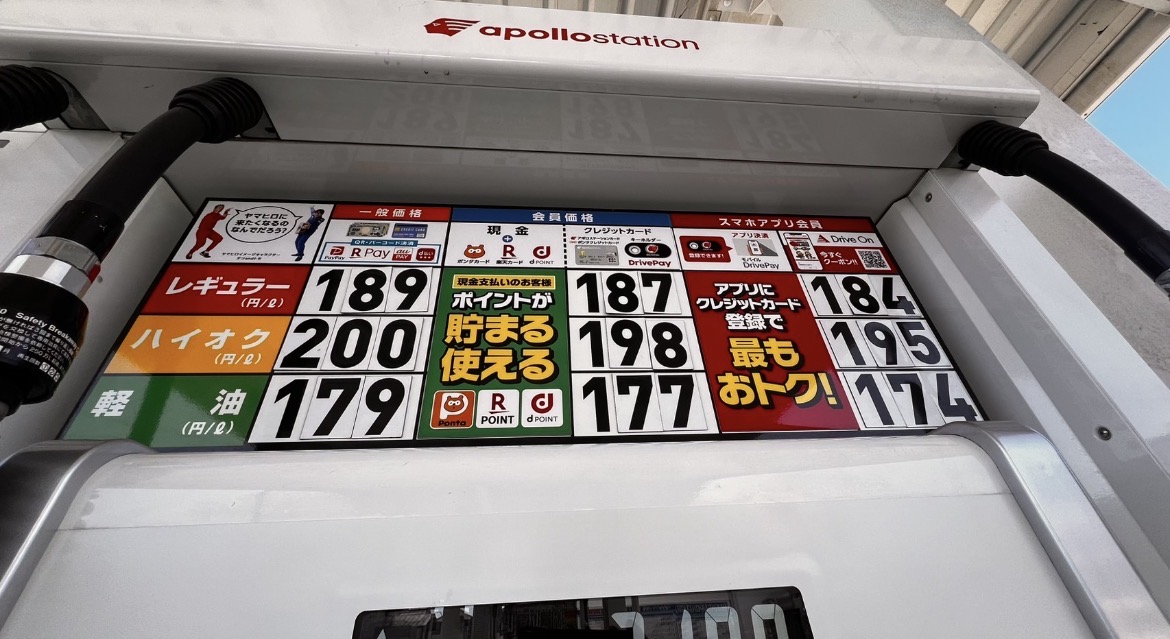
Regular gasoline prices in Japan hovered around 160 yen (approx. US$ 1) per liter until February 2026,
but by mid-March, they had surged to nearly 190 yen per liter.
Japan already has relatively high fuel costs, and a supply shock would push prices even higher, affecting commuters, logistics companies, and small businesses.
The government has already begun responding.
Oil has been released from national petroleum reserves stockpiles maintained for emergencies such as wars or natural disasters.
And on April 6, METI signaled that it is considering further releases.
But, such measures can only mitigate the impact temporarily, rather than addressing the underlying vulnerability.
Supply Chain Disruptions
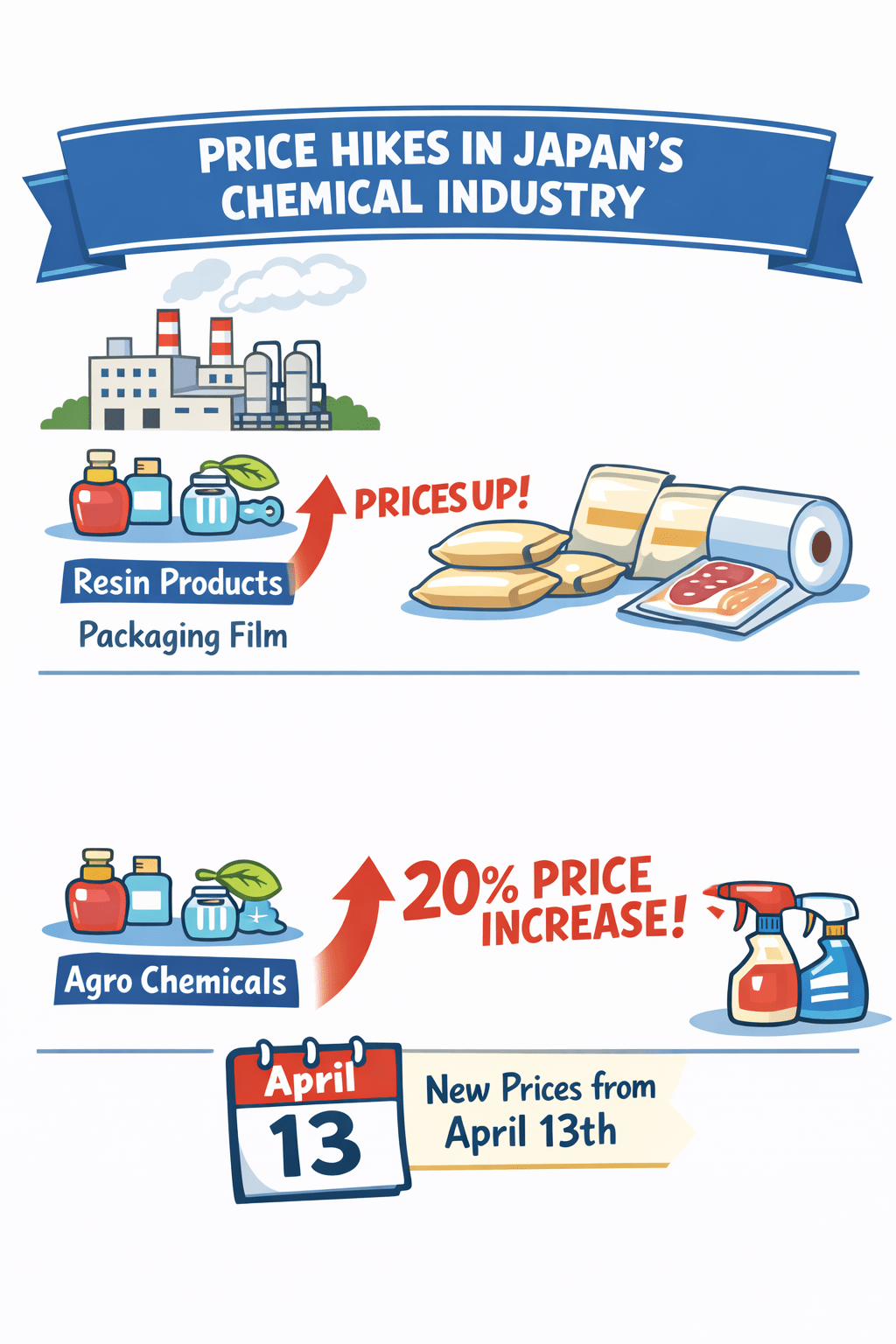
This trend is already visible in Japan’s manufacturing sector.
For example, Shin-Etsu Chemical has announced price increases for some of its resin products derived from ethylene, a basic petrochemical made from naphtha.
Kuraray, another major chemical company, has raised prices by an average of 20% for a range of chemical products used in fragrances, agricultural chemicals, and industrial cleaning agents, effective from shipments on the 13th of this month.
The impact is not limited to upstream chemical producers.
Gunze has also announced price increases for packaging films used in everyday products such as vegetables and confectionery, starting from the 21st, citing significant cost hikes from raw material suppliers.
What is important here is the structure of the impact.
Price increases begin at the level of basic materials such as naphtha-derived chemicals and gradually move downstream through the supply chain.
By the time they reach consumer-facing products, they appear as higher prices for everyday goods.
In other words, what starts as a disruption in energy supply eventually shows up in something as simple as the price of packaged food.
Inflation Pressure
This shift is already visible in everyday life.
Saizeriya, a major family restaurant chain in Japan known for its low prices, has temporarily suspended sales of some chicken-based dishes.
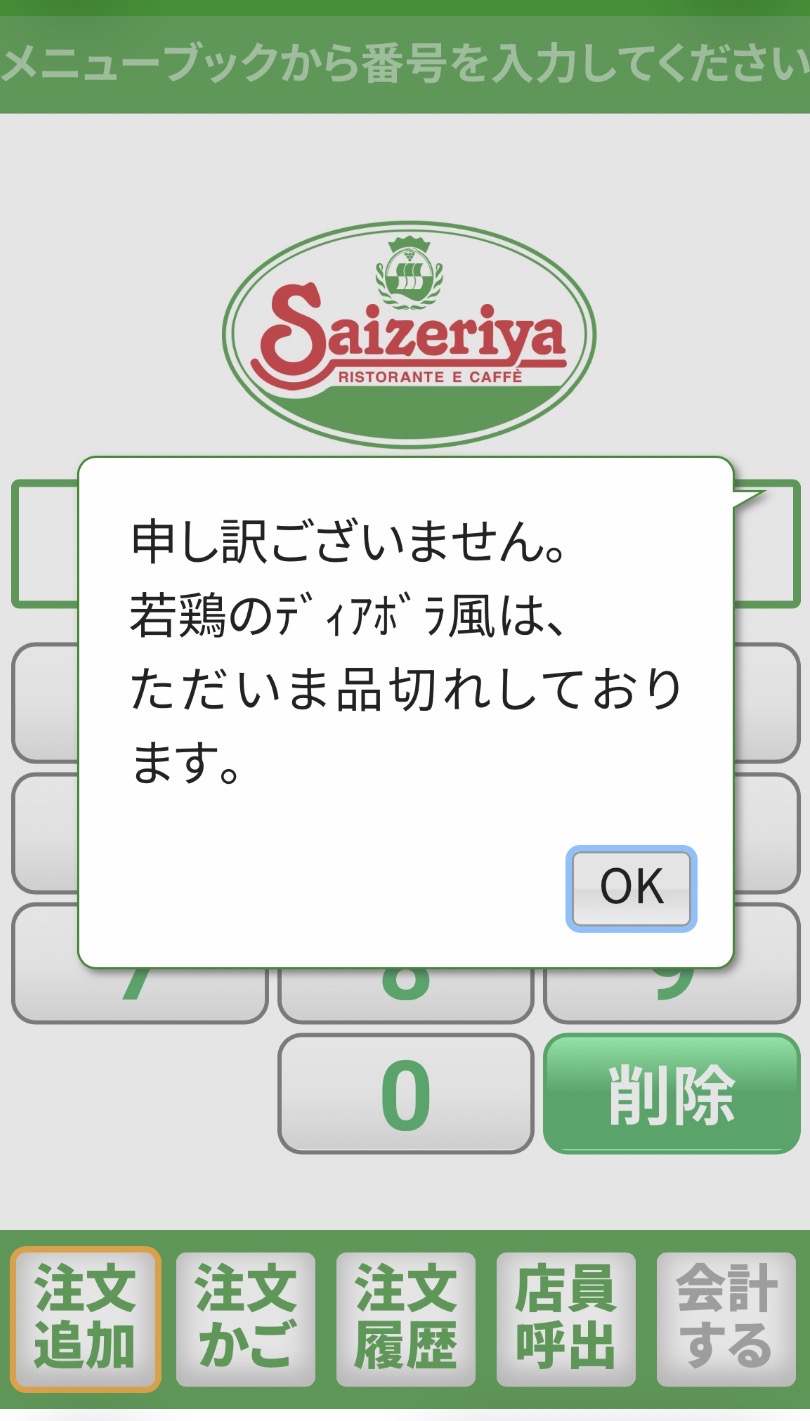
The reasons are not simple.
A combination of rising global demand, a weaker yen, and tensions in the Middle East has made stable procurement increasingly difficult.
This reflects a broader structural challenge.
Japan spent decades in a deflationary environment before the COVID pandemic, and although price increases have become more common in recent years, there is still a strong cultural reluctance toward raising prices.
While cost pass-through is gradually becoming more accepted, companies that rely heavily on a low-price model such as Saizeriya often find it difficult to increase prices directly.
As a result, they sometimes resort to measures such as suspending certain products instead.
For many people in Japan, this kind of experience is still relatively new.
It has triggered reactions ranging from surprise to concern.
And yet, at the same time, there remains a noticeable sense of optimism, perhaps even a belief that these disruptions are temporary…
What Does “Existential Risk” Really Mean for Japan??
In November 2025, Japan’s Prime Minister Sanae Takaichi stated during deliberations in the National Diet that a Chinese attack on Taiwan could constitute “an existential crisis for Japan,” arguing that a Taiwan contingency would effectively become Japan’s own crisis.
But is that REALLY the most immediate threat Japan faces today?
As I mentioned earlier, when we consider the balance of costs and benefits for China, an invasion of Taiwan is not impossible, but it would come with significant downsides, making it a double-edged sword rather than a straightforward option.
At the same time, we are already seeing signs of strain much closer to everyday life.
Raw material prices are rising to unusual levels, and there are growing concerns that supply may not be able to keep up.
So… what exactly should we consider a true “existential” risk?
A scenario that may or may not materialize,,,
or a situation where essential inputs become scarce, prices surge, and the impact is felt immediately across daily life?
And if the latter is already unfolding, could a disruption in the Hormuz Strait through which the majority of Japan’s oil imports pass, be closer to that “existential” reality than we tend to assume?
It is also worth noting that while Taiwan is recognized as a state by some countries, Japan itself does NOT formally recognize Taiwan as a sovereign nation.
Conclusion
The Hormuz Strait may look like a distant line on the map.
But for Japan, it is more like a narrow artery, one that quietly sustains the flow of everyday life.
When it tightens, nothing stops all at once.
Instead, the pressure builds.
Prices rise…
Supplies thin…
Small disruptions begin to spread…
So perhaps the real risk is not a sudden shock, but a slow constriction… one that we only notice when it becomes impossible to ignore.

 Hirokitia