
When travelers think of Japan in autumn, they often imagine Kyoto’s golden temples or the fiery red leaves of Nikko.
But just 45 minutes from Tokyo, in the quiet city of Mishima in Shizuoka Prefecture, the gateway to Mt. Fuji, there’s a hidden gem waiting to be discovered — Rakujuen Park (楽寿園), home to one of Japan’s most charming autumn traditions: the Chrysanthemum Festival (Kiku Matsuri / 菊まつり).
- Rakujuen Park: Where Old Japan Lives
- The Chrysanthemum Festival – A Celebration of Autumn’s Elegance
- Chrysanthemums & Shagiri: The Soul of Mishima
- How to Get Rakujuen Park?
Rakujuen Park: Where Old Japan Lives
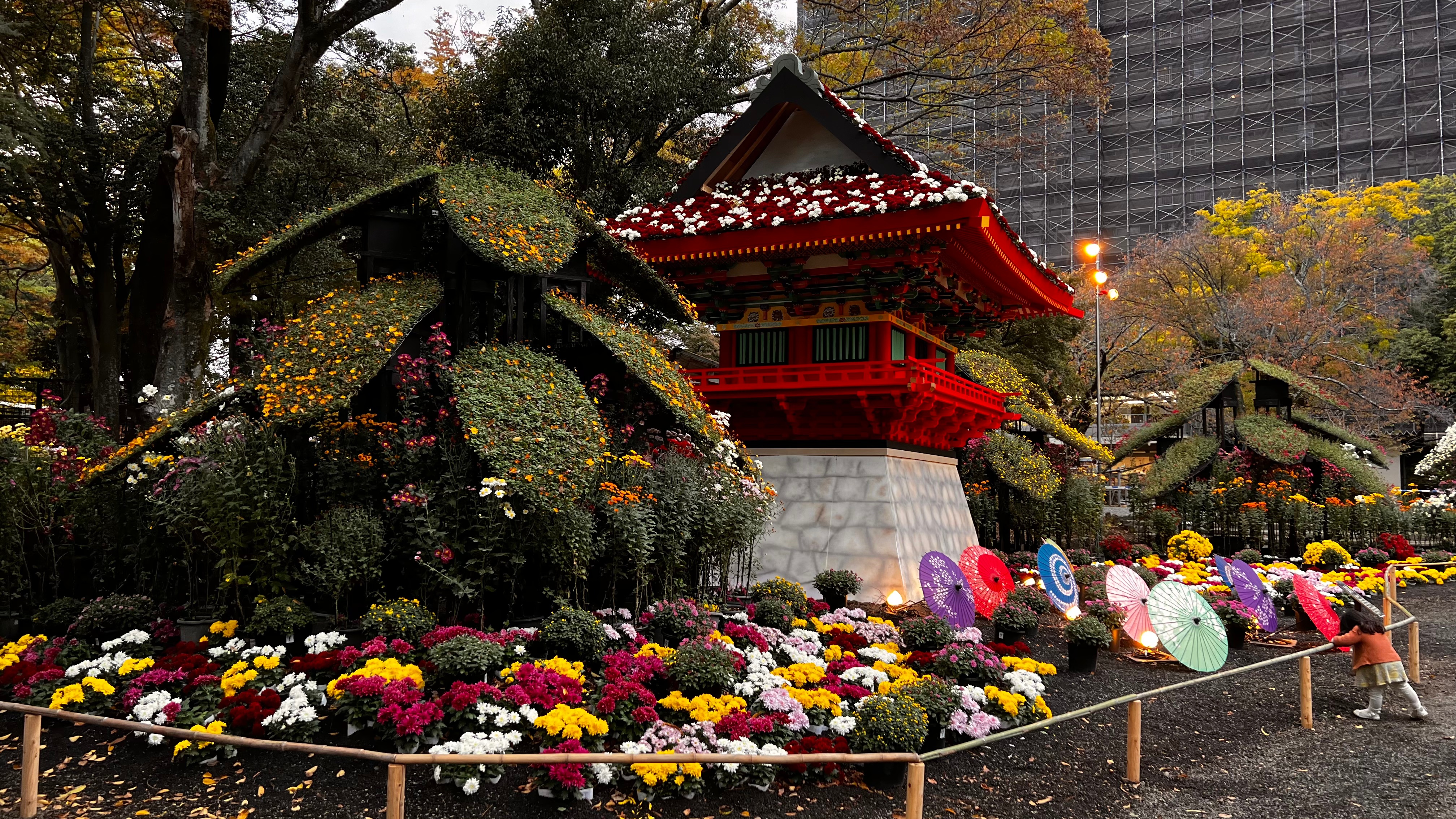
Rakujuen Park in Mishima was once an imperial villa, a peaceful retreat for a member of Japan’s royal family. Today, it’s open to the public, offering visitors a calm, nostalgic escape surrounded by nature.
The park is famous for its crystal-clear ponds fed by underground springs from Mt. Fuji, mossy stone bridges, and century-old trees that whisper stories of old Japan.
As autumn arrives, the park transforms. The air grows crisp, the leaves turn golden, and the sweet fragrance of chrysanthemums begins to fill the air.
The Chrysanthemum Festival – A Celebration of Autumn’s Elegance
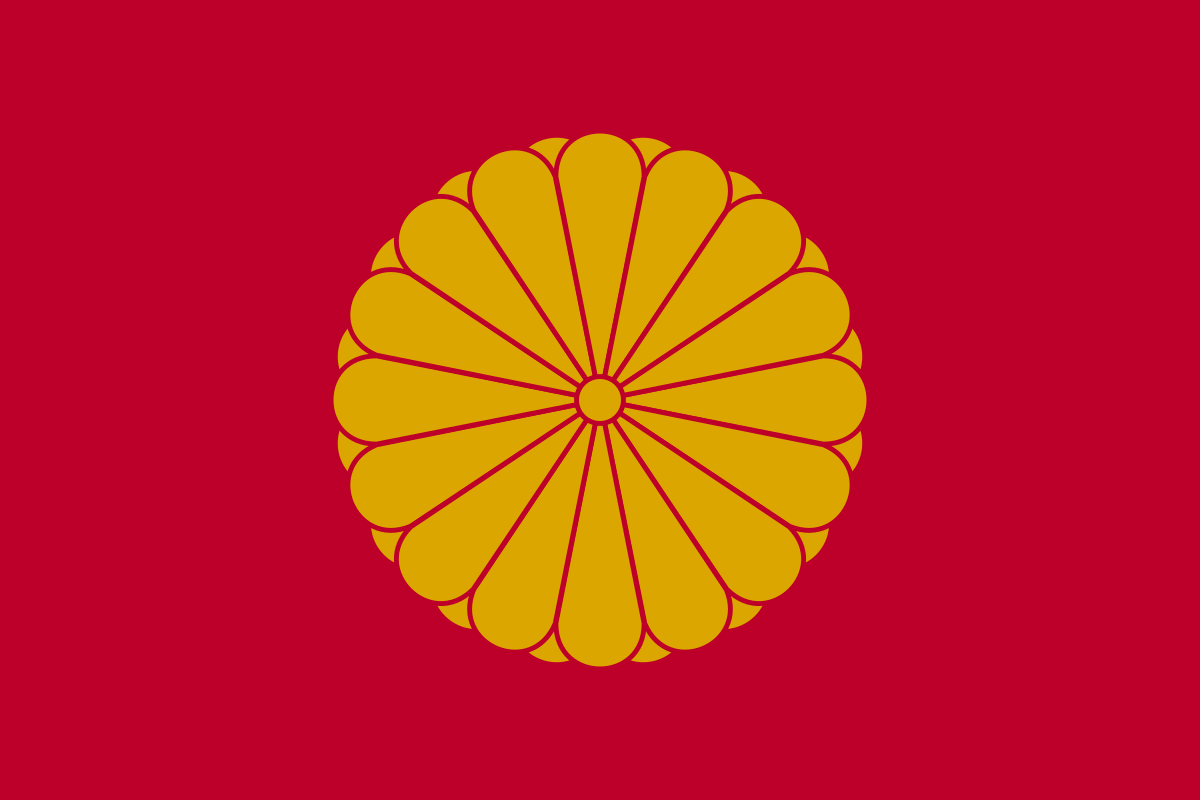
The chrysanthemum holds strong significance as a symbol of the Japanese Imperial Family.
The Chrysanthemum, or kiku, holds a special place in Japanese culture.
It symbolizes longevity, dignity, and purity — qualities admired since ancient times.
At Rakujuen Park’s annual Chrysanthemum Festival (typically held every November), local gardeners and flower masters showcase hundreds of carefully cultivated blooms.
From grand dome-shaped flowers taller than a child to delicate bonsai-style arrangements, each display is a masterpiece born of months of patient care.
Some exhibits feature chrysanthemum displays, an art form unique to Japan’s autumn traditions, including elaborate arrangements and a striking pagoda adorned with a roof entirely covered in chrysanthemums.
Walking through rows of colorful blooms while the scent of kiku drifts in the air feels almost like stepping into a dream — calm, fragrant, and quietly powerful.
Chrysanthemums & Shagiri: The Soul of Mishima

During the festival, small stalls appear near the park gates selling hot oden, roasted sweet potatoes, and green tea sweets.
After wandering among the flowers, there’s nothing quite like wrapping your hands around a warm cup of tea and watching the steam curl into the crisp autumn air.
But what truly brings Mishima to life isn’t just the food. It’s the SOUND.
Then you hear it! Rising from the park plaza… the deep pulse of taiko drums, the bright cry of flutes. It stops you mid-step.
This is Shagiri (しゃぎり), and it’s been echoing through Mishima for nearly 500 years.
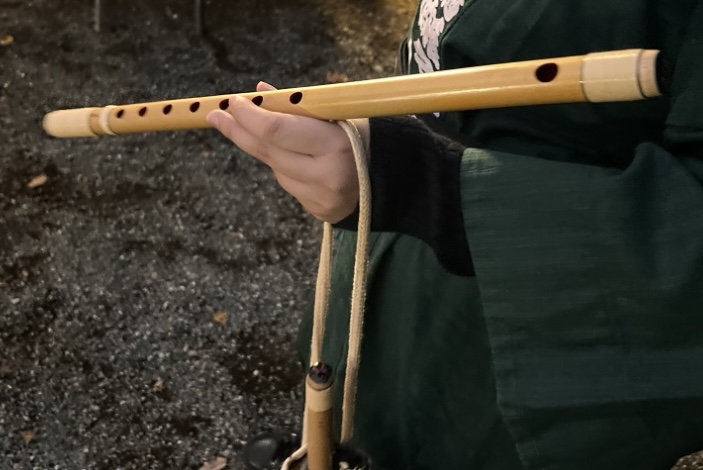
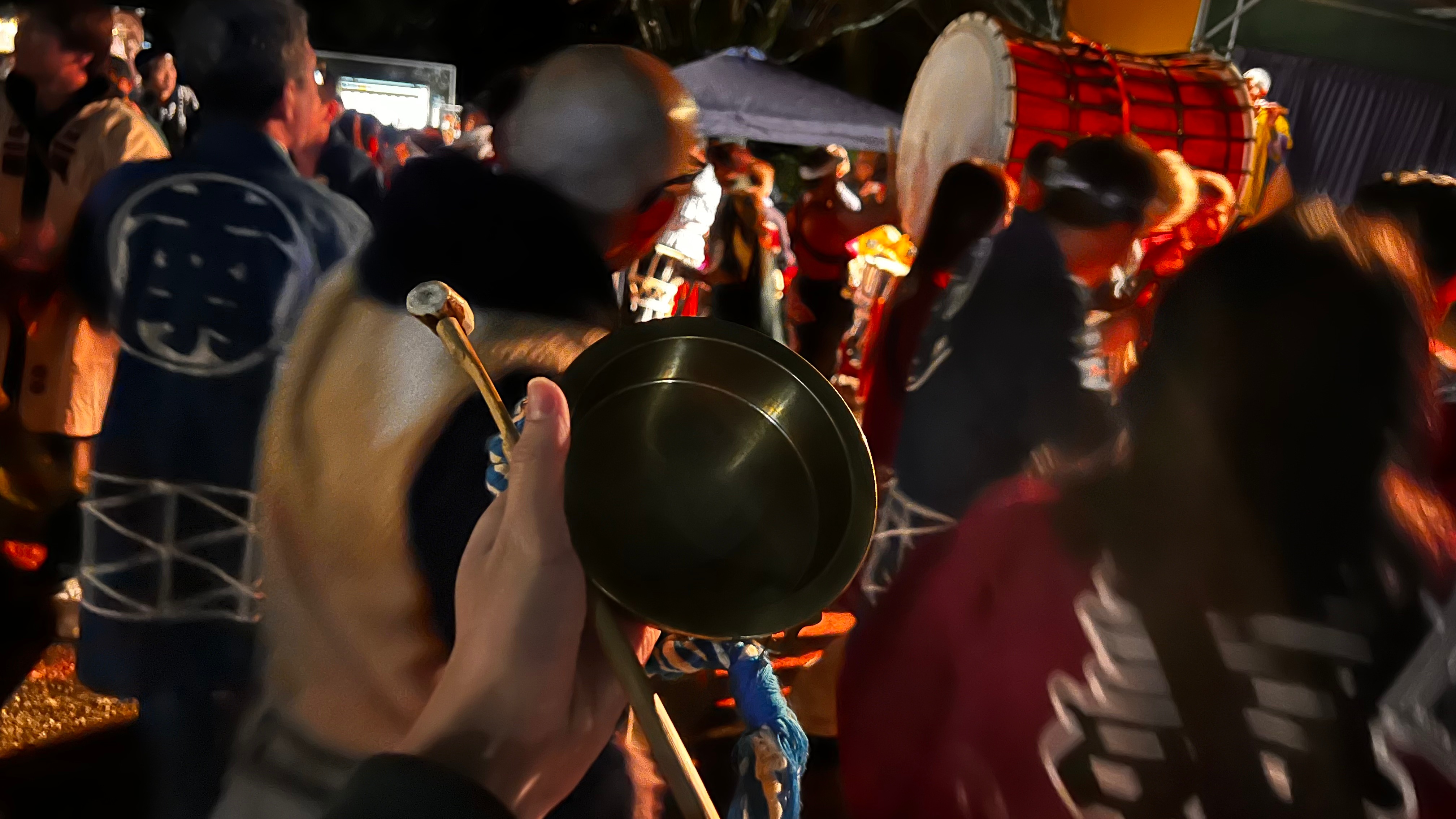
In the 16th century, during Japan’s Sengoku period, a ritual dancer named Kōwakayo-Sōdayū (幸若與惣太夫) created this music at Mishima Shrine.
Mishima sat at the crossroads of the Tokaido kaidō (Route), where Kyoto’s elegance collided with Edo’s swagger at the foot of Mount Hakone. Shagiri was considered to be born from that collision, and it’s never stopped playing.

Here’s what makes it unforgettable: every district in Mishima has its own preservation society.
The music is passed down orally, person to person, generation to generation. So each neighborhood plays the same ancient melody… but differently. Same notes, different soul.
During the Mishima Grand Festival (三嶋大祭り) in August, neighborhoods take turns leading the celebration.
And sometimes, if fortune smiles, the Chrysanthemum Festival is graced by that same vibrant spirit. Drums and flutes come alive, their melodies swirling through the park plaza as if they, too, are intoxicated by the sight of the golden blooms inside the park.
The music was once meant for shrine processions. Now it spills into autumn evenings, mixing with laughter and the scent of chrysanthemums, turning a quiet garden into something alive.

Not for crowds or Instagram spots.
You come for moments like this: families chatting under lanterns, children with sticky fingers from candied apples, elderly gardeners beaming as they show you their prize chrysanthemums.
An old woman demonstrates how to properly appreciate a flower. A drummer catches your eye and grins.
Mishima doesn’t try to impress you. It simply invites you in! And somewhere between the drums and the flowers and the steam rising from your tea, you realize… this is what Japan feels like when tourists aren’t watching.
How to Get Rakujuen Park?
Did you know the beautiful Rakujuen Park is located in Mishima City, just a stone’s throw from Tokyo?
It’s true! You can hop on the Tokaido Shinkansen (Bullet Train) from Tokyo Station and be there in a mere 45 minutes!
If you prefer a more scenic route, the local train takes just over two hours, or you can drive the Tomei Expressway in about two hours. Basically, it’s so close that a day trip is totally doable!
No wonder Mishima is a popular weekend getaway for Tokyoites! I’ve been there dozens of times myself!
Plus, the best part? Rakujuen Park is only a two-minute walk from Mishima Station. Talk about convenient!
- Location: 19-3 Ichibanchō, Mishima City, Shizuoka Prefecture 411-0036 (〒411-0036 静岡県三島市一番町19-3)
- Access: Just next to JR Mishima Station (on the Tokaido Shinkansen line, Tokaido Main Line, and Izu-Hakone Railway)
| Admission Fee | Notes | |
| Individual | ¥300 (About $2) | |
| Group Rate | ¥270 | For groups of 30 or more people. |
| Annual Pass | ¥1000 |
Special Event: Night Chrysanthemum Viewing (夜菊鑑賞)
The Night Chrysanthemum Viewing, held for a limited time every November, is free of charge (for the admission fee).
- Dates (2025):
- Friday, November 7 – Sunday, November 9
- Friday, November 14 – Sunday, November 16
- Hours: 17:00 – 21:00 (Last entry at 20:45)
If Kyoto’s autumn feels like a grand symphony, then Mishima’s is a haiku — short, subtle, and deeply moving.
The Chrysanthemum Festival at Rakujuen Park may not be famous worldwide, but it surely captures something essential about Japan… the harmony between beauty, patience, and quiet celebration!
So, next time you’re looking for a one-day trip from Tokyo, skip the crowds and head to Mishima!
Let the fragrance of chrysanthemums and the soft autumn light remind you that true beauty often blooms in silence.

 Hirokitia