
When we think of traditional Japanese houses, we often imagine sliding doors, tatami mats, and wooden verandas that open up to a carefully designed garden.
On the other hand, Western-style residences bring to mind grand staircases, chandeliers, and spacious ballrooms. But what if you could experience both worlds in a single building?
That’s exactly what you’ll find at Rokkaen (六華苑) in Kuwana, Mie Prefecture. This unique property is a rare example of “Wayo Secchu” (和洋折衷) architecture — a style that blends Japanese and Western elements into one harmonious design.
What is “Wayo Secchu”?
The term Wayo Secchu (和洋折衷) literally means “a compromise between Japanese and Western styles.”
It became popular in the late 19th and early 20th centuries, when Japan was rapidly opening up to Western culture after centuries of isolation. Instead of simply copying Western design, architects began experimenting with blending it into Japanese traditions.

The people are dressed in Western attire, and the interior is in Western style.
In fact, during the Meiji and Taisho periods, it was quite common to see a Western-style mansion connected directly to a Japanese-style residence.
People at the time weren’t always comfortable with living in a purely Western home — chandeliers and heavy curtains felt too foreign — so architects often attached a zashiki (tatami parlor) or an entire Japanese wing to balance it out.
The result was a space where you could enjoy the elegance of European design, while still keeping the familiarity and warmth of a Japanese home.
Rokkaen is one of the best surviving examples of this trend. From the Western side you’ll see high ceilings, decorative windows, and a touch of Victorian elegance.
Step into the Japanese side, and you’re suddenly surrounded by tatami floors, sliding shoji doors, and views of a traditional garden. It’s this smooth transition between two worlds that makes the concept of Wayo Secchu so fascinating!
The Story of Rokkaen
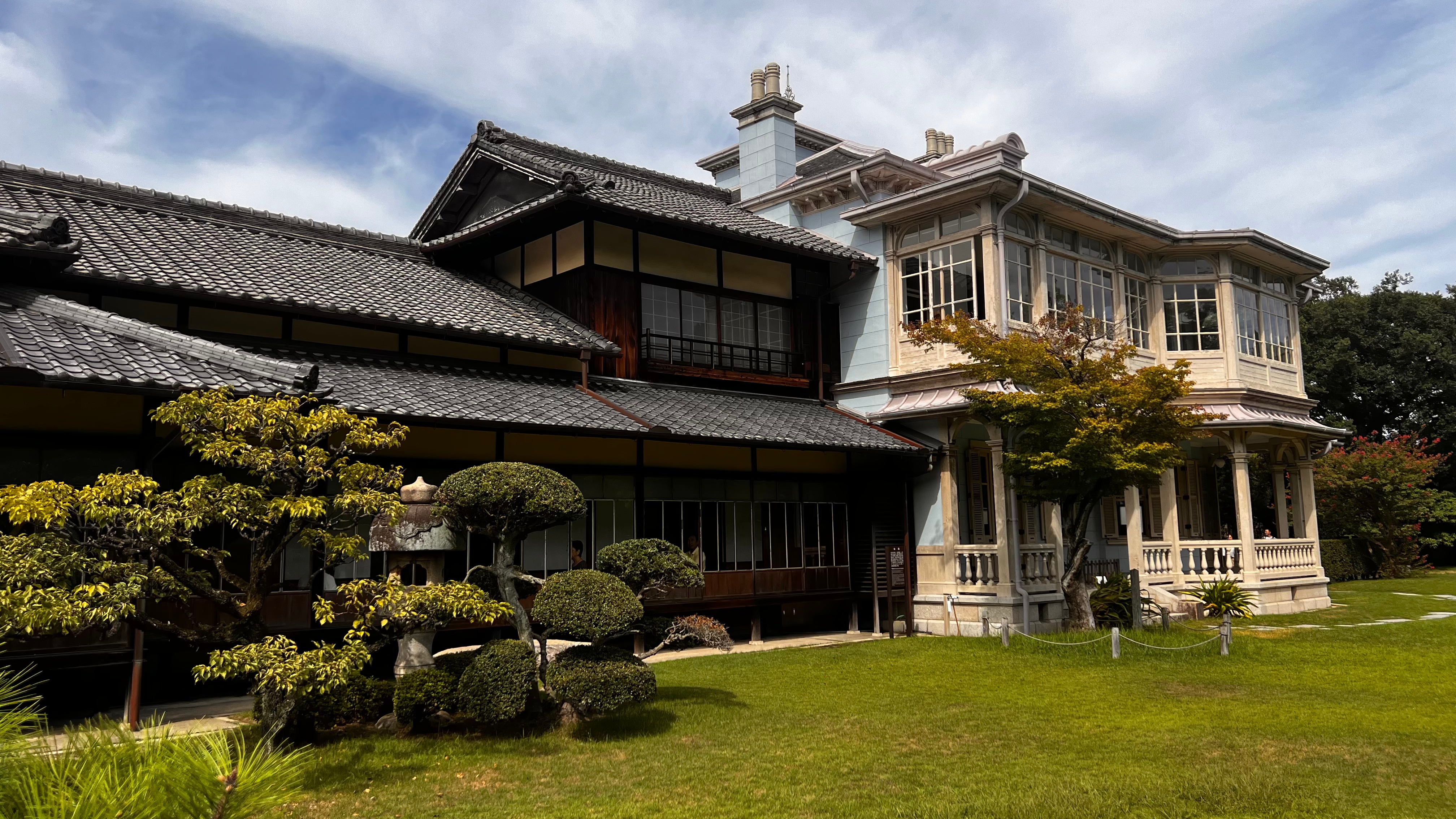
Rokkaen, also known as the former residence of the businessman Seiroku Moroto II, was built as his new home in Kuwana City, Mie.
Kuwana itself is a historic castle town that prospered as a key post station on the Tōkaidō Road, the main route connecting Edo (now Tokyo) and Kyoto during the Edo period. Thanks to its strategic location at the mouth of the Ibi River, it flourished as both a transportation hub and a center of trade.
Even today, Kuwana is known for its traditional festivals, delicious local cuisine like clam dishes (hamaguri), and as a gateway to nearby attractions such as Nagashima Spa Land and Nabana no Sato.
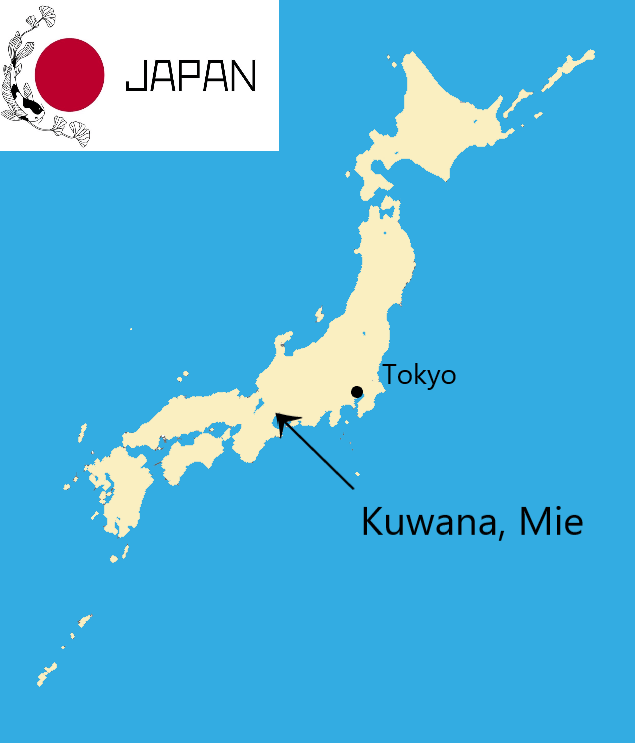
📍Location:663-5 Oaza-Kuwana, Kuwana City, Mie 511-0009
(〒511-0009 三重県桑名市大字桑名663-5)
About 20 minutes from Nagoya by Kintetsu train to Kuwana Station, then a short taxi ride or 20-min walk.
🕒Opening Hours:9:00 AM – 5:00 PM (last entry 4:00 PM)
Closed on Mondays (or the following day if Monday is a national holiday)
💵Admission:Adults: 460 yen, Junior high school students: 150 yen, Children under elementary school age: Free
🚆Access:From Nagoya Station: Take the Kintetsu Nagoya Line (approx.20 min) → Get off at Kuwana Station → Taxi (5 min) or walk (20 min)
From Yokkaichi: Kintetsu Yokkaichi Station → Kuwana Station (15 min)
Free Parking
🌸Best Time to Visit:Spring for cherry blossoms, Autumn for vibrant foliage
Construction began in 1911 and was completed in 1913, during the Taisho era. The property covers about 18,000 square meters, with a Western-style mansion, a Japanese residence, several storehouses, and an expansive garden. Today, it is designated as an Important Cultural Property of Japan.
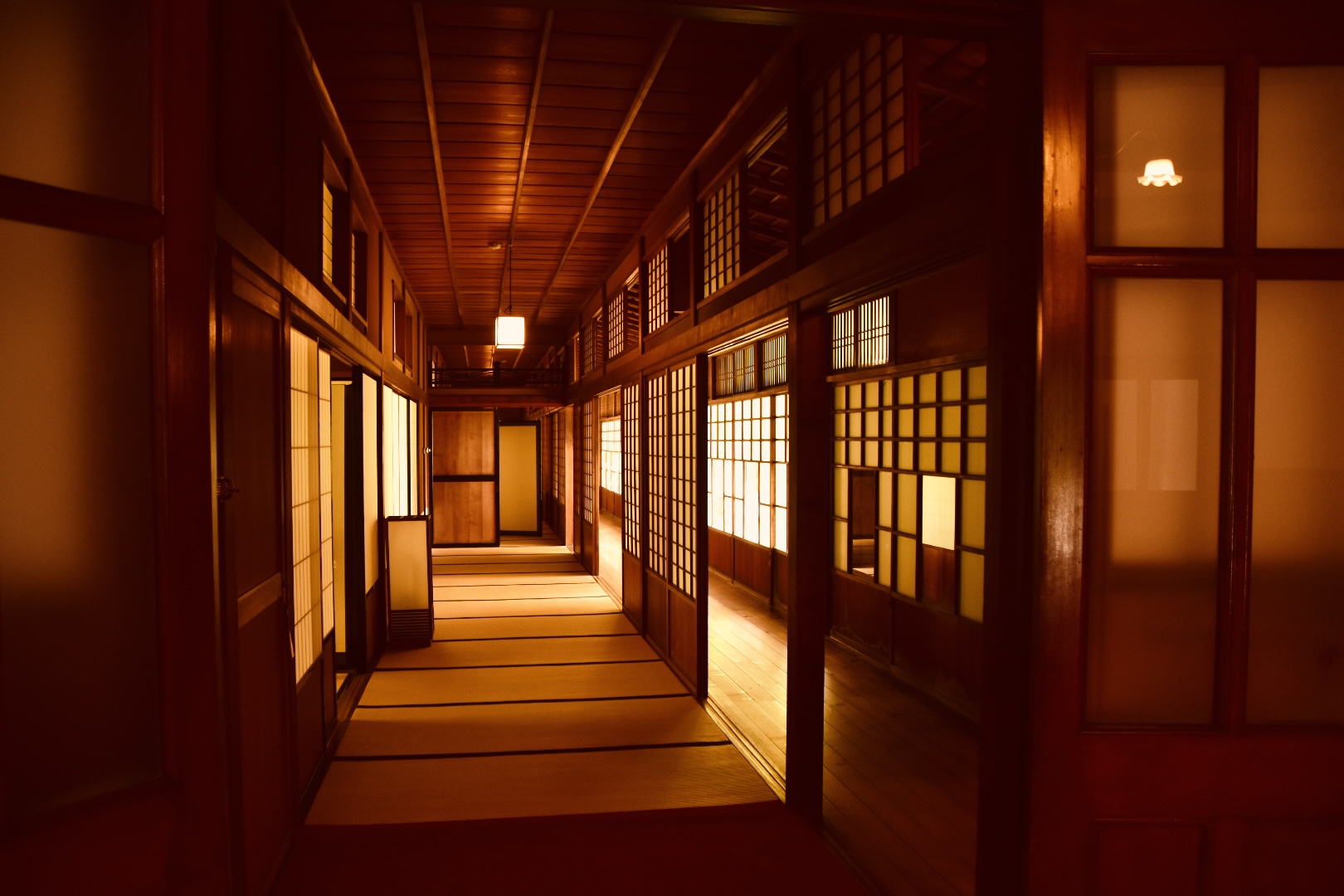
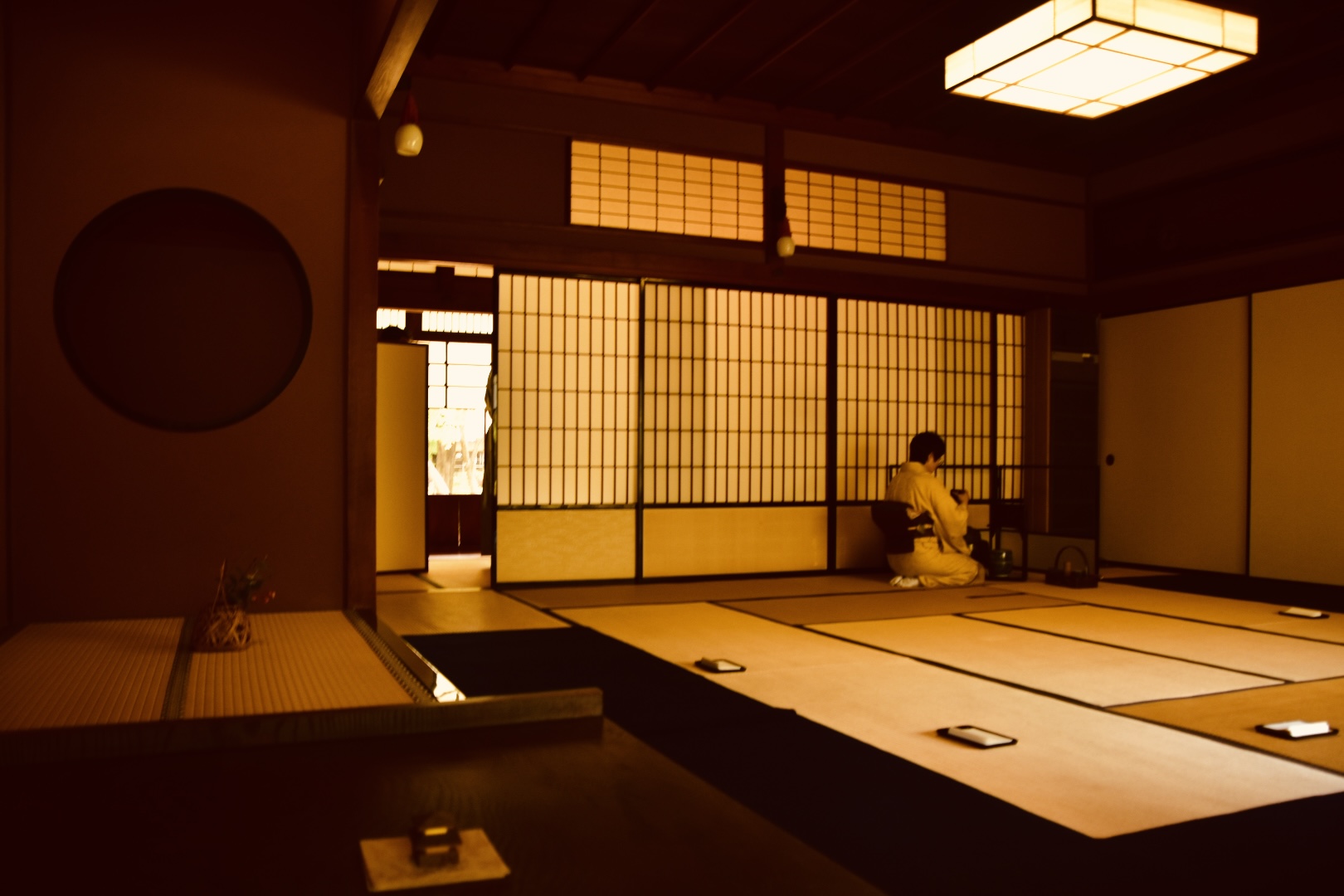
The Japanese residence is single-story with numerous tatami rooms. It’s very refined, and when I visited, elderly ladies were practicing tea ceremony.
I think tea ceremony in traditional tatami rooms makes for such a charming and authentic experience for foreign visitors!
The Western-style house is a two-story wooden structure designed by Josiah Conder, the English architect often called the “father of modern Japanese architecture”.
Conder is also famous for designing the Rokumeikan (See ukiyo-e above) in Tokyo, a symbol of Japan’s early embrace of Western culture.
Walking through Rokkaen, you’ll notice fascinating details. The grand entranceway was once reserved only for the master of the house and his guests, and originally featured a carriage porch to highlight the façade of the Western building.
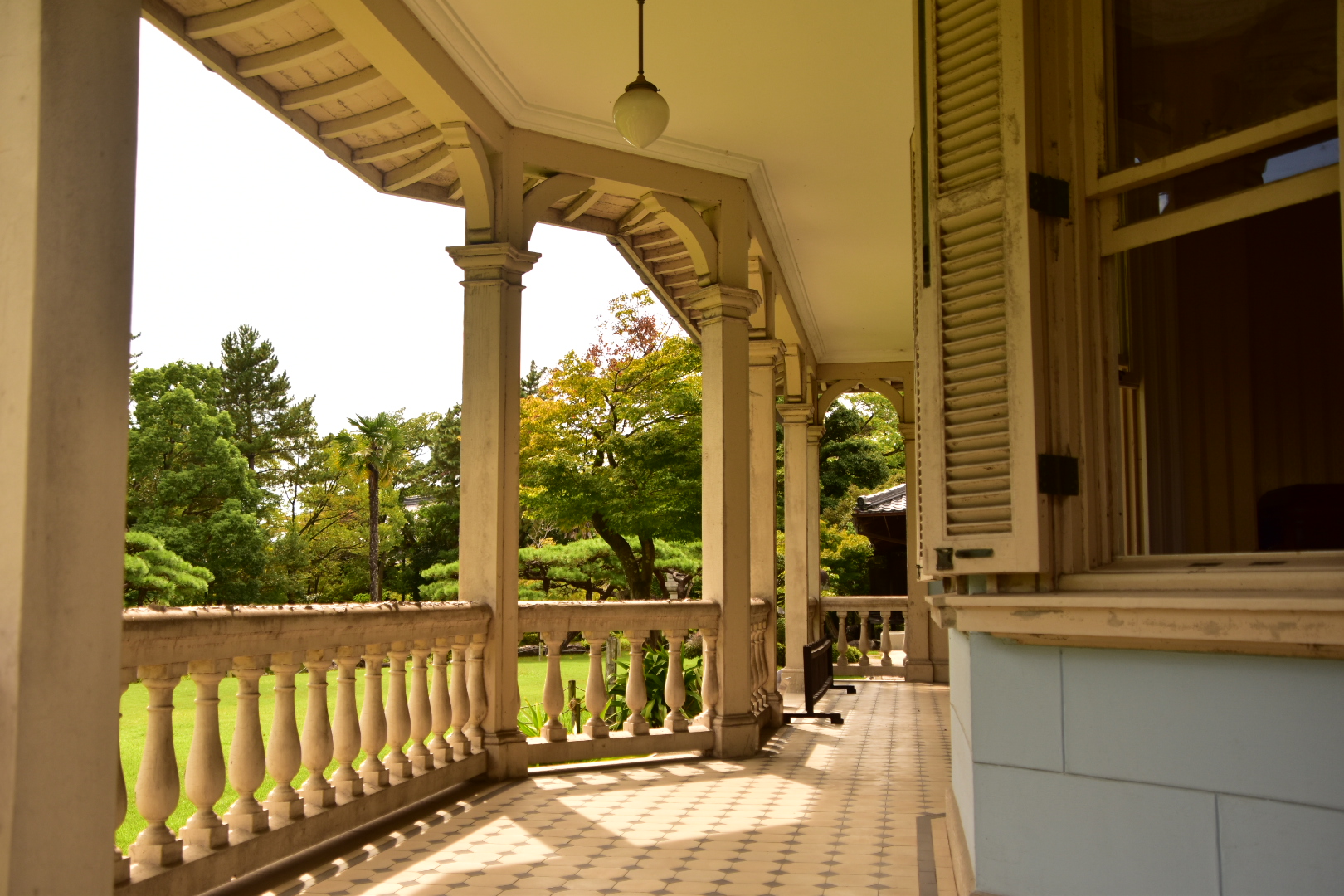
Unfortunately, the porch was destroyed during World War II. The entrance tiles, however, still remain — they were imported by Conder himself and were also used for the veranda and even in the lavatories.
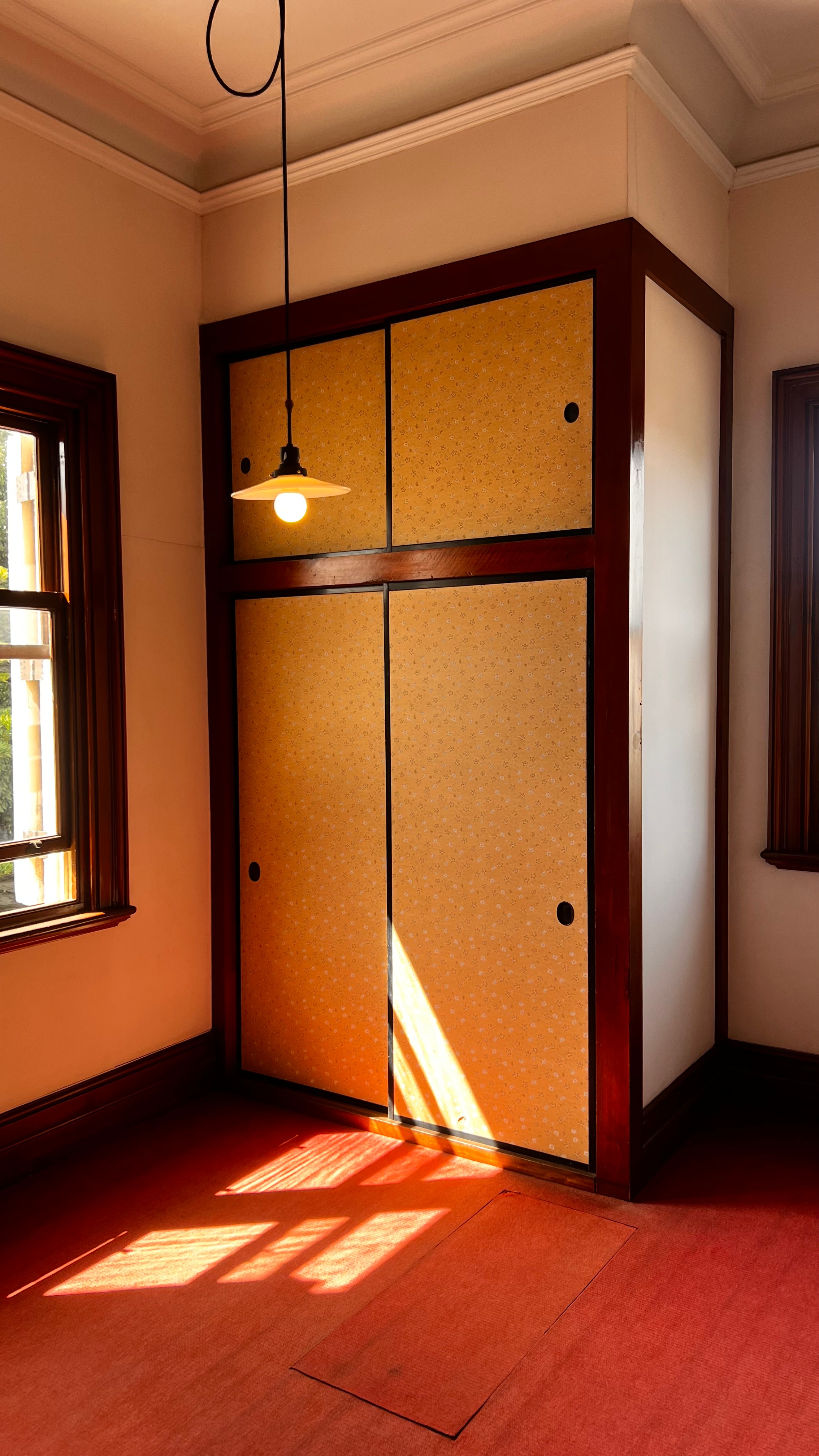
Another unique detail is the servants’ quarters. While the maids’ rooms are built in a Western style, their closets are distinctly Japanese. This curious mix is not only rare but also a perfect example of how Wayo Secchu architecture blurred the lines between East and West in everyday life.
Of course, one of the highlights is walking through the house itself. You pass from a chandelier-lit European drawing room into tranquil tatami rooms that open onto a traditional Japanese garden.
The garden, with its ponds, stone lanterns, and seasonal flowers, was designed to be admired from both the Japanese and Western sides of the residence — another clever way of harmonizing two cultures.
Why Rokkaen Feels Special
Why Rokkaen Feels Special
For me, this mix felt more than just an architectural curiosity — it was like stepping between two different worlds without ever leaving the same house.
One moment you’re standing in a Western-style drawing room with chandeliers and large windows, and the next you’re sitting on tatami, sliding open shoji screens to look out over a perfectly manicured Japanese garden. The transition is so smooth that it feels completely natural, even though the cultural roots are worlds apart.

What struck me most was how well the house captures the spirit of its era. At a time when Japan was searching for a way to modernize while staying true to its traditions, Rokkaen represents that delicate balance. It doesn’t reject Western influence, but it also doesn’t abandon Japanese identity. Instead, it brings the two together in a way that still feels harmonious more than a century later.

In today’s Japan, you rarely encounter such a flawless example of East meeting West under one roof. That’s what makes Rokkaen so special. It’s not just a historical site; it’s a living reminder of how cultures can learn from each other and create something unique.
If you’re planning a trip around Mie Prefecture or near Nagoya, Rokkaen is absolutely worth a visit!
The mansion itself is fascinating, but don’t miss the garden, which is spacious, peaceful, and beautifully designed for a leisurely stroll. Depending on the season, you’ll find camellias, cherry blossoms, or autumn leaves adding even more charm to the scenery.
Rokkaen is a place where you can slow down, soak in history, and feel the dialogue between East and West all around you. It’s one of those hidden gems that leaves you with a sense of timelessness — the kind of place that lingers in your memory long after you’ve left.

 Hirokitia