
Kyrgyzstan Passes Law To Prioritise Kyrgyz Over Russian
the headline of a BARRON’S article reads—a move interpreted as Moscow’s influence across Central Asia waning amid the invasion of Ukraine.
Many have suggested that Central Asia is now distancing itself from Russia. My first reaction was the same as many others: “But is that really the full story?”
During my travels across the region, I didn’t notice a strong anti‑Russian sentiment. If anything, Russian language and culture remain deeply embedded in everyday life.
Curious to get the full picture, I decided to dig deeper—looking into language policies, foreign policy approaches, and public opinion. Here’s what I discovered!
- Is Central Asia Really Turning Away from Russia?
- Nationalism Doesn’t Always Mean “Anti-Russia”
- Are Central Asian Countries Really “Pro-Russia”?
- So, is Central Asia “Leaving Russia”?
Is Central Asia Really Turning Away from Russia?
Headlines like “Central Asia is distancing itself from Russia” have become increasingly common in the media since the Ukraine war began.
Particularly in Kyrgyzstan, the recent bill requiring TV and radio broadcasts to prioritize Kyrgyz has drawn attention as a symbol of the declining status of Russian.
But can we really interpret these developments simply as “turning away from Russia”?
First, let’s take a look at the role of Russian in Central Asia.
Russian isn’t just a foreign language in this region—it has long served as a common language deeply embedded in all aspects of society, from education and administration to business and media.
Speaking Russian locally often isn’t a political statement; it’s just part of everyday life.
The recent Kyrgyz language bill shouldn’t be seen as an attempt to exclude Russian outright. Rather, its main aim seems to be rooted in nationalism: to strengthen the presence of Kyrgyz as the national language.
It’s also important to note that such nationalist movements didn’t suddenly appear after Russia’s invasion of Ukraine.
-
- Kazakhstan: Since 2017, the country has been transitioning from Cyrillic to Latin script, seeking to reduce Russian influence.
- Uzbekistan: Since independence, Uzbekistan has prioritized Uzbek, revising place names and education curricula to reinforce its national identity.
These initiatives are less about turning away from Russia and more about redefining relationships with it—they reflect a natural process of mature, independent nations reassessing their own culture and language.
Nationalism Doesn’t Always Mean “Anti-Russia”
One thing we should never forget: the rise of nationalism in Central Asia doesn’t automatically equal a rejection of Russia.
Yes, policies promoting local languages and moves toward cultural independence do reflect a stronger sense of national identity. But that doesn’t necessarily mean an immediate confrontation with Moscow.
In fact, what’s happening looks more like this: countries are strengthening their own languages and cultures, while at the same time avoiding open hostility with Russia. It’s a delicate and pragmatic balancing act.
Why Multi-Directional Diplomacy?
To understand why Central Asian states pursue such diverse foreign policies, the best place to start is with a map.
Central Asia is literally at the crossroads of civilizations—bordered by Russia, China, India, Iran, Pakistan, Turkey, and within reach of Europe. In such a location, putting all your eggs in one basket is simply too risky.
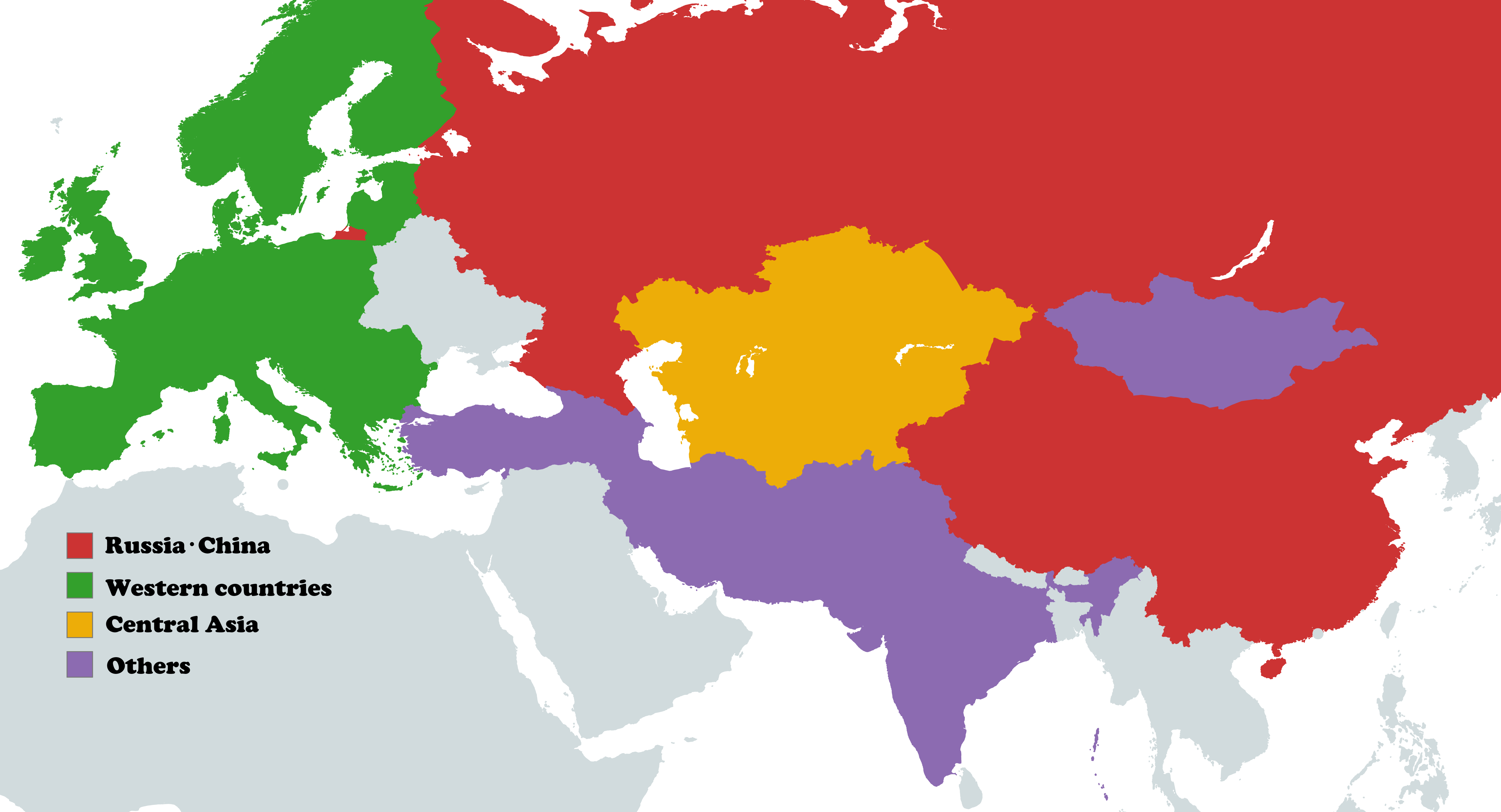
(Map created with MapChart, © 2025, licensed under CC BY-SA 4.0)
If a country leans too heavily on just one power bloc, relations with others could easily sour. That’s why Central Asian nations intentionally avoid taking sides, choosing instead to maintain balance—never too dependent, never openly hostile.
Take Uzbekistan as an example: while keeping friendly ties with Russia, it welcomes Chinese investment, and at the same time strengthens relations with Europe, the U.S., and Turkey. This isn’t “sitting on the fence”—it’s a smart way to get the best of all sides.
Beyond “Turning Away From Russia”
Since Russia’s invasion of Ukraine, Central Asian countries have had no choice but to steer their diplomacy even more carefully. But what we see here isn’t simply “distancing from Russia.” It’s more about reducing over-dependence.
They want to protect their own languages and cultures, yes—but without outright hostility toward Russia. Flexibility is the key.
Take Kyrgyzstan, for example. Around 30% of its GDP comes from remittances, much of it sent back by Kyrgyz migrant workers in Russia. On top of that, Kyrgyzstan is still a member of the Russian-led Eurasian Economic Union (EAEU). These ties make it unrealistic to just cut things off.
That’s why, even after the Ukraine invasion, most Central Asian states have avoided directly condemning Russia or joining Western sanctions. It’s not about supporting Moscow or being afraid to criticize—it’s about carefully balancing relations to maximize their own national interests.
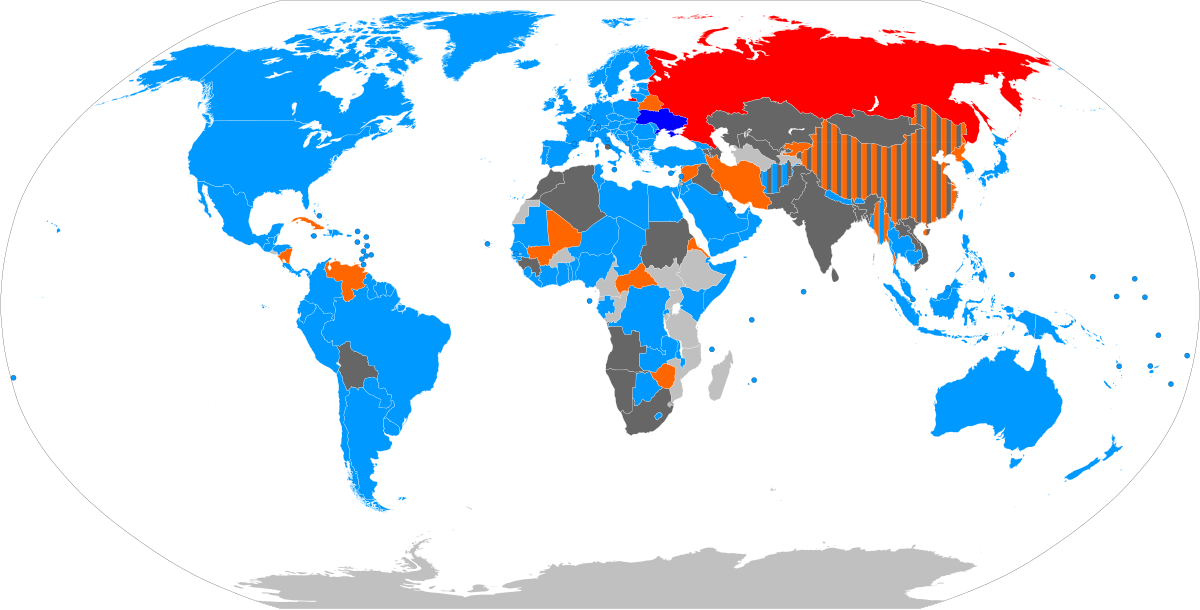
(Image: Chubit, Wikimedia Commons, CC BY-SA 4.0)
Balancing Without Breaking
Uzbekistan’s multi-directional diplomacy is a great example. It maintains friendly ties with Russia, but also deepens economic cooperation with China, Turkey, and the West. That’s not hesitation—it’s a calculated effort to strengthen independence while keeping all options open.
Kyrgyzstan, too, withdrew from the Russian-led Collective Security Treaty Organization (CSTO) but remains in the China-led Shanghai Cooperation Organization (SCO). Again, the message is clear: keep many doors open, depend on no one too heavily.
Avoiding enemies, avoiding dependence, and keeping multiple options on the table—that’s the realistic path Central Asian nations have chosen today.
Are Central Asian Countries Really “Pro-Russia”?
At first glance, it might seem like Central Asian countries are drifting away from Russia. Laws limiting the use of Russian and a stronger push for cultural independence can give that impression. But what do ordinary people in these countries actually feel about Russia?
To dig deeper, I looked at the latest survey data showing how people across Central Asia view Russia:
| Country | Favorability Toward Russia (%) (2017–2019 ➡ 2022) | Trend |
|---|---|---|
| Tajikistan | 78% ➡ 95% | Stable and consistently high |
| Kyrgyzstan | 85% ➡ Approx.65% | Still friendly, but more blame placed on the U.S. and Ukraine |
| Uzbekistan | 74% ➡ Approx.65% | Stable overall, but generational differences are visible |
| Kazakhstan | 79% ➡ 13% (sharp drop) | Youth leading a clear “Russia distancing” trend |
At first sight, these numbers suggest a strong pro-Russian attitude in the region. But look closer, and you’ll notice widening generation gaps.
Older generations, who rely heavily on Russian television and traditional media, still show strong support for Moscow. Younger people, however—those active on YouTube, Telegram, and other alternative sources—are more likely to lean toward Ukraine or adopt a neutral stance (Demoscope).
When I visited Tajikistan in April 2025, I saw this split with my own eyes. Many elderly locals I spoke with openly expressed support for Russia. Yet among younger people, skepticism was much more common.
And this isn’t just a Tajikistan thing—it’s visible across the region, especially in Kazakhstan, where Russia’s invasion of Ukraine triggered a dramatic shift in public opinion.
On the diplomatic front, though, none of these countries have completely cut ties with Moscow. Instead, they’re carefully balancing relationships with Russia, China, and Western countries. It’s a cautious “multi-vector” diplomacy, and at the same time, a quiet rethinking of national identity.
So, is Central Asia “Leaving Russia”?
The truth is, it’s not black and white. The region’s relationship with Russia is better seen as a gradient, shaped by history, culture, politics, and economics.
From my travels, what struck me most was this: you can’t simply label these countries as “pro-Russia” or “anti-Russia.” They are testing their own paths, trying to stand more independently without leaning too heavily on any one power.
And maybe there’s a lesson here for people in Japan as well. We sometimes depend too much on the United States. Central Asia’s flexible, multi-directional diplomacy might hold valuable lessons for countries like ours.
Travel gives you the chance to see these subtleties firsthand—the things you can’t get just by scrolling the news. The language people use on the streets, the posters hanging in town squares, the casual conversations in cafés… small details like these reveal where a country is really heading.
That’s why, for me, travel isn’t just sightseeing—it’s a way to uncover the living reality of international relations. And the deeper you look, the more fascinating it gets.

 Hirokitia
「【Is Central Asia Really Turning Away from Russia?】 The Surprising Reality Beneath the Surface」への1件のフィードバック