When you look at a map of Paris, you’ll first notice the beautiful order of its streets. From the Arc de Triomphe, twelve grand avenues radiate out like spokes on a wheel—famous names like the Champs-Élysées, Avenue Victor Hugo, and Avenue George V. Each one tells a story. Many streets in Paris are named after celebrated writers, presidents, and national heroes. But have you ever noticed who’s missing?
Figures seen as controversial or shameful in French history rarely get the honor of a street name in central Paris. Robespierre, the leader of the French Revolution’s Reign of Terror, serves as an example.
In fact, there’s no “Rue Robespierre” (Robespierre St.) in the city center. The only one you’ll find is in Saint-Denis, a low-income suburb known for its high immigrant population and frequent social unrest. In Paris, even street names quietly reflect the country’s choices about who to remember—and who to forget.
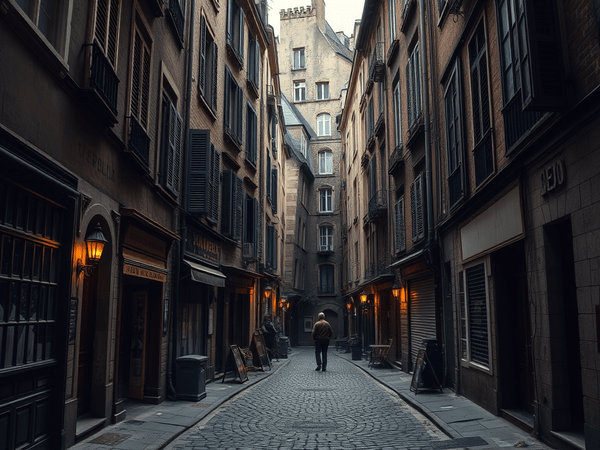
But this polished image of Paris is relatively new. Until the mid-19th century, the city was a dark, dirty, overcrowded maze of medieval alleyways—especially around Île de la Cité, near Notre-Dame Cathedral. Narrow streets blocked out sunlight, sewage ran through open gutters, and diseases like cholera were common.
Île de la Cité ― a Notorious Crime Hub
Back in the early 19th century, one of the most notorious areas in Paris was the stretch between Le palais de justice de Paris and Notre-Dame Cathedral, right in the heart of Île de la Cité.
This district was packed with aging buildings that rose tightly along narrow, maze-like alleyways. Sunlight barely reached the streets, and the entire area felt more like a forgotten medieval slum than the grand capital of France. It was here that some of the city’s poorest residents lived, crammed into unsanitary tenements where conditions were dire.
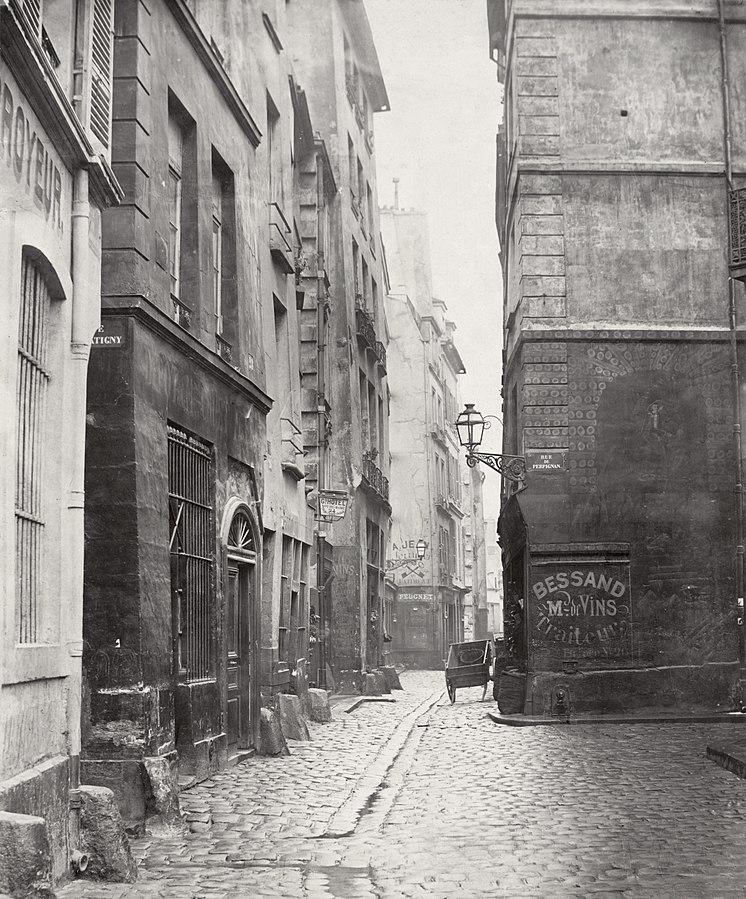
These winding alleyways were also hotspots for crime. Murders, robberies, and assaults were a daily reality. The situation was so bad that people used to say, “If there was crime, odds were it happened on Île de la Cité.” At the time, it was known as one of the most dangerous and lawless parts of the entire city. Even the authorities struggled to control what happened there.
For many Parisians, this small island in the middle of the Seine symbolized everything that was wrong with old Paris: overcrowded, unhygienic, and frighteningly unstable.
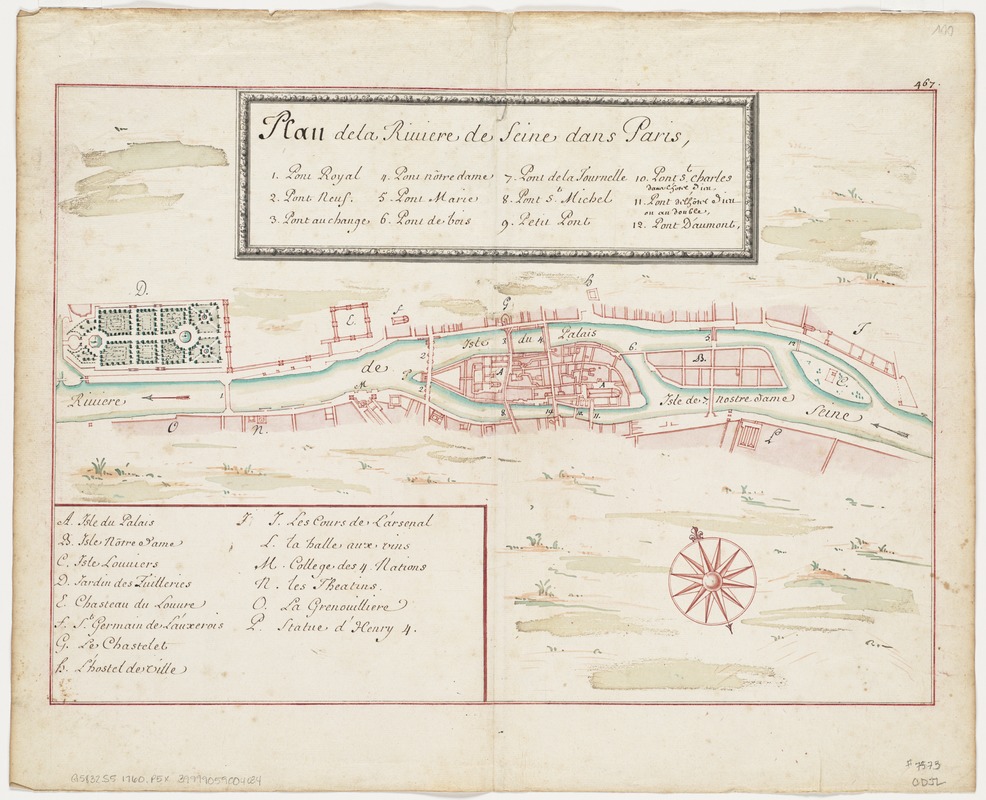
It also shows dead-end streets that are strikingly different from the present-day layout.
Source: “Plan de la Riviere de Seine dans Paris,” Norman B. Leventhal Map Center Collection, 1760 – Boston Public Library.
The philosopher Victor Considerant once wrote that four out of every seven infants in Paris didn’t survive their first year. Victor Hugo, in The Hunchback of Notre-Dame, devoted an entire chapter to describing the tangled mess of streets, comparing them to bouquets of roads blooming chaotically from the city gates.
Haussmann’s transformation of Paris and its legacy
Everything changed in 1853 when Emperor Napoleon III appointed Georges-Eugène Haussmann to completely redesign Paris.
Over the next 17 years, Haussmann demolished old, overcrowded neighborhoods. He built the modern city we recognize today. This city features wide, straight boulevards, open squares, and new parks. It also has upgraded sewer systems, clean water supplies, and impressive architecture.
His ambitious vision made Paris healthier, safer, and undeniably more beautiful—but it also deepened social divisions.
Haussmann’s renovations pushed thousands of working-class Parisians out of the city center and into the outskirts, where there were fewer services and opportunities. Central Paris became the domain of the wealthy and powerful, while the poor were quietly relocated to the margins.
Though praised for bringing order and elegance, the project created new social and geographic inequalities that persist even today.
This divide grew even more apparent in the 20th century, as France’s former colonies—especially Algeria, Morocco, and Tunisia—gained independence. Many immigrants from these Muslim-majority countries were invited to work in France and settled largely in the working-class suburbs (Banlieues) that had been shaped by Haussmann’s earlier urban planning.
Over time, these neighborhoods became home to large North African communities facing discrimination, poor housing, and high unemployment.
While central Paris maintained its clean and elegant image, the banlieues struggled. They suffered from chronic underfunding, heavy policing, and neglect by national policies. Social unrest boiled over in riots in 2005 and again in 2023, sparked by police violence and long-standing frustration.
These outbursts were more than just isolated incidents—they revealed a deeper problem: a city designed to keep some people inside its center, while pushing others to the periphery.
Today, projects like Grand Paris aim to better connect these suburbs with the heart of the city through new metro lines and public investments.
But many residents worry this will bring gentrification rather than real change. It might clean up the banlieues’ appearance without addressing the root inequalities dividing Paris.
So next time you stroll down a Parisian boulevard, take a closer look. Those wide sidewalks and elegant buildings seem timeless. They were shaped by bold political decisions. Some decisions empowered people, while others excluded them.
The streets of Paris don’t just lead you through the city; they lead you through its complex history of class, control, migration, and identity. And even today, they quietly ask: who truly belongs in the heart of Paris?
Sources
・Dominique Kalifa, Crime, Investigation, and Media: Public Order and Culture in 19th-Century France, translated by Rei Umezawa, Hosei University Press, 2016.
・Patrice de Moncan, Le Paris d’Haussmann, Les éditions du Mécène, 2009.

 Hirokitia