
When you think about Uzbekistan and Japan, they couldn’t seem more different. One lies at the heart of the ancient Silk Road, where golden deserts stretch out beneath towering minarets, and the other is an island nation wrapped in mist and embraced by restless seas.
Yet beneath those surface contrasts, a surprising bond exists that few people know about.
Walk the streets of Tashkent today and you’ll discover a genuine love affair with all things Japanese—young Uzbeks poring over textbooks to learn the language, and in Samarkand, Japanese travelers greeted with open arms wherever they go.

But what is it that inspires such affection for Japan so far from its shores? A little-known chapter of shared history holds the answer.
- “Behave like Japanese people”: A Japanese Legacy in Uzbekistan
- Where the Sakura Blooms in Silence
- Japanese Culture Inside Tashkent
“Behave like Japanese people”: A Japanese Legacy in Uzbekistan
A forgotten story unfolded in the heart of Central Asia after World War II ended. While history books focus on Europe and the Pacific, something remarkable was happening in Uzbekistan.
In August 1945, Soviet forces swept through Manchuria, capturing hundreds of thousands of Japanese soldiers. Many expected to return home. Instead, they found themselves on trains heading west, deep into Soviet territory.
Around 25000 of these men ended up in Uzbekistan—strangers in a land of deserts and ancient cities.
The Soviet authorities did not treat these individuals as prisoners to be eventually repatriated. Instead, they regarded them as “compensation”—a form of human payment for war damages.
This practice represented a grave violation of human rights and contravened international law at the time, including the Hague Convention of 1907 and the terms outlined in the Potsdam Declaration.
Far from their island homes, they faced brutal winters, meager rations, and years of uncertainty. Some would wait nearly a decade before seeing Japan again. Others never made it back at all.
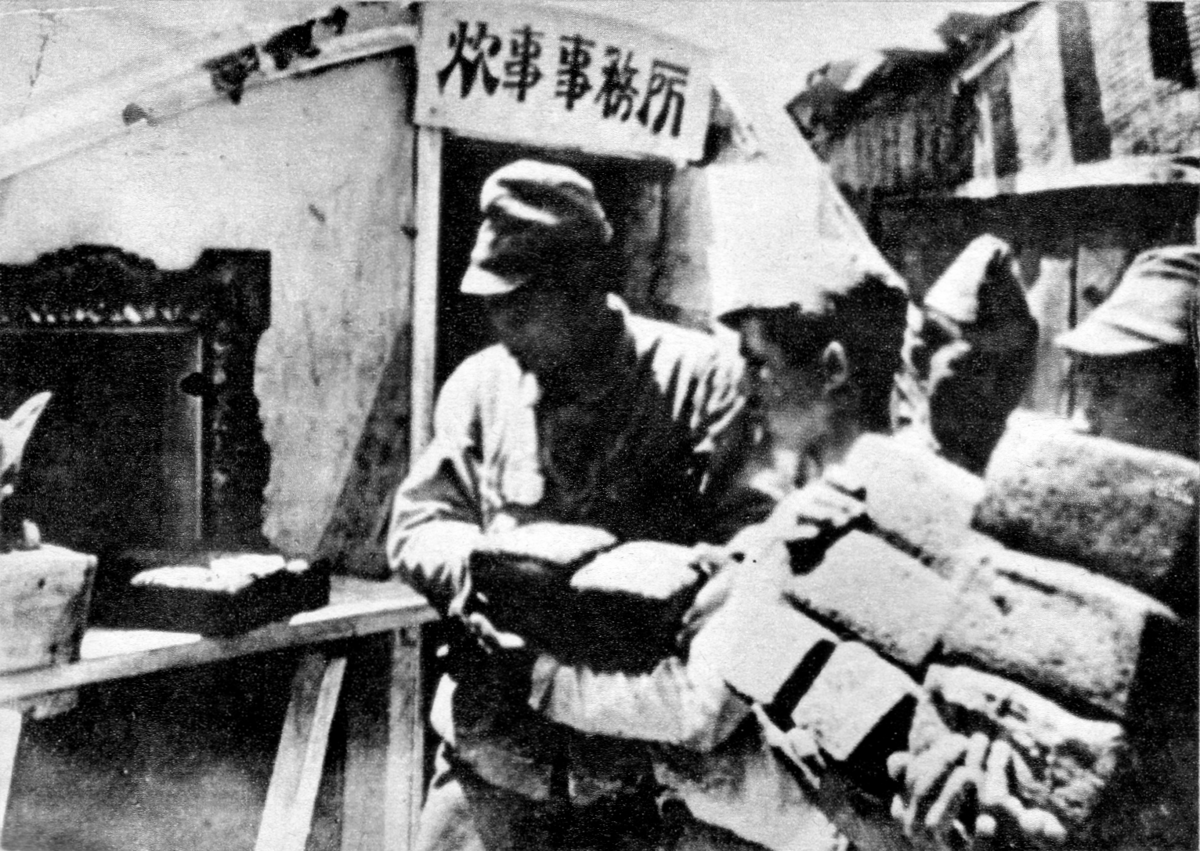
Despite the hardship, Japanese POWs left a lasting legacy in Uzbekistan’s infrastructure.
Over 20000 were scattered across the country and tasked with building essential infrastructure—bridges, roads, dams, and buildings—in regions such as Angren, Bekabad, and Kokand.
Beyond the capital, these POWs played a vital role in regional development. In Andijan, for example, they constructed houses, schools, and community bridges, helping post-war Uzbekistan recover.
Above all, the majestic Navoi Theater stands as a living monument to the unique bond between Uzbekistan and Japan. More than just a building, it embodies a shared chapter of history—a story passed down through generations in both countries.

The Navoi Theater, which opened in 1947, was constructed by Japanese POWs. They also built the Mukimi Theatre, the Central Telegraph Office, the Ministry of Culture, and worker dormitories—many of which still stand today.
Every morning, like clockwork, the Japanese internees marched to the construction site of the Navoi Theater.
The rhythmic click-clack of their wooden clogs against the pavement echoed through the quiet streets, becoming an unwitting alarm clock for the local residents. Each evening, they returned in the same orderly fashion, their footsteps marking the day’s end.
Their daily sustenance was meager—just 300 grams of coarse black bread and a watery soup that barely deserved the name. Even this modest portion could shrink if their work fell short of expectations.
A story circulates from those days: A small child, moved by compassion, slipped some bread and fruit through the camp fence. Days later, the child discovered a delicately carved wooden toy placed in the same spot. Running home, wide-eyed with wonder, the child showed the treasure to his mother.
She smiled knowingly and said, “The Japanese never forget kindness. They work with discipline and integrity. Be like them.”

When Japanese politician Taro Aso became the first Japanese cabinet member to meet with Islam Karimov, the former President of Uzbekistan, in 1997, Karimov looked at him with sincere appreciation and said:
When I was a child, my mother used to take me to the Japanese internment camp every weekend. Each time, she would say the same thing:
The 16th Meeting of the Budget Committee, House of Councillors, 183rd Session of the National Diet of Japan pp.24 -25, 13 May 2013
“Look, my son, at those Japanese soldiers. They work even when the Russian guards aren’t watching.
They work even when no one is watching.
When you grow up, you must become a man who works just like them—someone who does the right thing even when no one is watching.”
…I took those words to heart and lived by them—and now, I have become the president.
Remarkably, the theatre emerged nearly unscathed from the devastating 1966 earthquake that struck Tashkent, destroying around 70% of the city’s buildings. Many structures built with the help of Japanese POWs, including the Navoi Theatre, withstood the quake and remained intact.

Cited from an article from Kun.uz “Землетрясение, сильнее чем в Турции: на исторических снимках стихия, потрясшая Ташкент в 1966 году“, 18 Feb 2023
These buildings served as shelters for those who lost their homes, saving countless lives and standing as a lasting testament to the craftsmanship and resilience of their builders.
Where the Sakura Blooms in Silence
From Tashkent Airport, you can reach the Japanese cemetery by taking Bus No. 94 and 38, or using Yandex Go to get to Yakkasaray Cemetery.
Once inside the public cemetery, you’ll find a section dedicated to the graves of 79 Japanese POWs who died in Uzbekistan after WWII.
For over 40 years, Mirokil Fozilov and his father lovingly tended to these graves. During the Soviet era, the deceased were buried without headstones—only simple soil mounds. But after Uzbekistan’s independence, with support from both the Japanese government and the families of the deceased, proper gravestones bearing their names were finally erected.
During one visit, Japanese Ambassador Kyoko Nakayama brought a cherry blossom sapling from Japan and planted it beside the graves. Mirokil cared for it with devotion, and today his sons continue that tradition. The sakura still blooms each spring, quietly watching over the resting place of the fallen.
When I visited the cemetery in Yakkasaray in April 2025, an elderly man was sweeping the area. He handed me a stick of incense for praying. I’m not sure whether it was Mr. Fozilov himself, but he clearly shared in the spirit of honoring those laid to rest there.

Suddenly, I heard familiar words being spoken nearby—it was a group of Japanese tourists. They, too, had come to offer prayers. Their guide was explaining the history of the site. Some of them glanced in my direction, perhaps surprised to see a young traveler at such a solemn place in a foreign land.
After the Soviet era, this shared history became a symbol of cultural exchange.
In Tashkent, a dedicated museum now commemorates the Japanese POWs — the original exhibition, opened in 1998, was replaced in 2024 by a new facility showcasing photographs, documents, work uniforms, and handmade items such as a wooden baby crib crafted for local markets.
Uzbek filmmakers have also embraced the topic: a documentary was released in 2019, and a feature film titled Sakura Scent (Аромат сакуры), featuring both Uzbek and Japanese actors, is currently in development.
Japanese Culture Inside Tashkent
Japanese culture continues to resonate in modern-day Tashkent.
One of the most peaceful places in the city is Yapon bog’i, the Japanese garden tucked away in the capital. Located right next to the Tashkent Television Tower, the Japanese Garden charges an entrance fee of 30000 soʻm (approx. $2.33) for adults.
Despite the cost, it remains a peaceful and uncrowded spot—ideal for a relaxing visit. With its koi pond, red bridges, and carefully manicured pines, the garden offers a quiet escape where visitors can experience a slice of traditional Japanese aesthetics.
While it may not fully capture the traditional aesthetics of a Japanese garden, it is cherished by locals as a serene retreat. Visitors from neighboring countries like Kyrgyzstan and Kazakhstan also come to enjoy its calm atmosphere.

Beyond the garden, Japanese cuisine has also found a home here—restaurants across Tashkent serve authentic ramen, sushi, and tempura, attracting both locals and tourists alike.
Meanwhile, Japanese pop culture enjoys immense popularity among the younger generation in Uzbekistan. Anime, manga, and J-pop have a strong and growing fanbase, with themed cafés and community events regularly held to celebrate beloved characters.
One Piece and Jujutsu Kaisen are especially well-known and widely watched across the country.
From cultural diplomacy to everyday entertainment, Japanese influence has become a familiar and welcome part of life in Tashkent.
Uzbekistan and Japan may seem worlds apart at first glance, distant in both geography and culture. Yet, a profound historical bond ties them together, one that continues to shape the way many Uzbeks view Japan with warmth and admiration.
While exploring Uzbekistan, it’s easy to get lost in the richness of its local culture and history. But if you take a moment to reflect on the unexpected ties between these two nations, your journey through this fascinating land will take on an even deeper, more meaningful layer!

 Hirokitia
「Uzbekistan and Japan – A Surprisingly Unknown Relationship」への1件のフィードバック